Journal of Occupational
Health and Epidemiology

Rafsanjan university Of medical sciences
Volume 15, Issue 2 (Spring 2026)
J Occup Health Epidemiol 2026, 15(2): 128-135 |
Back to browse issues page



Ethics code: IEC/23/FEB/177/01


Download citation:
BibTeX | RIS | EndNote | Medlars | ProCite | Reference Manager | RefWorks
Send citation to:


BibTeX | RIS | EndNote | Medlars | ProCite | Reference Manager | RefWorks
Send citation to:
Manoharan K, Gopakumar G, Shriraam V, Joseph A, Sameer M. Prevalence of Musculoskeletal Discomfort among Daily-Wage Working Women in a South Indian Panchayat Area. , J Occup Health Epidemiol. 2026; 15 (2) :128-135
URL: http://johe.rums.ac.ir/article-1-1143-en.html
URL: http://johe.rums.ac.ir/article-1-1143-en.html
Related article in
Google Scholar
Google Scholar
Similar articles


1- Ph.D. Research Scholar, Dept. of Clinical Nutrition, Sri Ramachandra Faculty of Allied Health Sciences, Sri Ramachandra Institute of Higher Education and Research. (DU), Chennai, Tamil Nadu, India.
2- Assistant Prof., Dept. of Clinical Nutrition, Sri Ramachandra Faculty of Allied Health Sciences, Sri Ramachandra Institute of Higher Education and Research. (DU), Chennai, Tamil Nadu, India. ,gayathri.g@sriramachandra.edu.in
3- Professor, Dept. of Community Medicine, Sri Ramachandra Institute of Higher Education and Research. (DU), Chennai, Tamil Nadu, India.
4- Professor, Division of Epidemiology, School of Public Health, SRM Institute of Science and Technology, Kattankalathur - 603203, Tamil Nadu, India.
5- Associate Prof., Dept. of Orthopaedics, Sri Ramachandra Institute of Higher Education and Research. (DU), Chennai, Tamil Nadu, India.
2- Assistant Prof., Dept. of Clinical Nutrition, Sri Ramachandra Faculty of Allied Health Sciences, Sri Ramachandra Institute of Higher Education and Research. (DU), Chennai, Tamil Nadu, India. ,
3- Professor, Dept. of Community Medicine, Sri Ramachandra Institute of Higher Education and Research. (DU), Chennai, Tamil Nadu, India.
4- Professor, Division of Epidemiology, School of Public Health, SRM Institute of Science and Technology, Kattankalathur - 603203, Tamil Nadu, India.
5- Associate Prof., Dept. of Orthopaedics, Sri Ramachandra Institute of Higher Education and Research. (DU), Chennai, Tamil Nadu, India.
Article history

Received: 2025/11/6
Accepted: 2026/05/21
ePublished: 2026/06/30
Accepted: 2026/05/21
ePublished: 2026/06/30
Subject:
Occupational Health
Keywords: Musculoskeletal Pain [MeSH], Women Working [MeSH], Rural Population [MeSH], Occupational Health [MeSH], Pain Measurement [MeSH], Well-Being [MeSH]
Full-Text [PDF 301 kb]
(165 Downloads)
| Abstract (HTML) (306 Views)
Table 1. General characteristics of participants (n = 300)
Each participant could report discomfort in more than one body region; therefore, the percentages are not mutually exclusive and do not sum to 100%. R, right; L, left.
A total of 111 (37%) participants reported experiencing pain several times a day in one or more body parts. The most affected areas were the right foot (14%), right shoulder (12.66%), and hip (12.66%). Severe discomfort (“very uncomfortable”) was reported by 186 (62%) participants, most commonly in the hip (22.66%), lower back (22.33%), and right lower leg (17%). In addition, 116 (38.66%) women reported that pain in one or more regions substantially interfered with their work capacity, principally at the hip (22.66%), lower back (14.33%), and lower leg (7.33%).
Notably, although hip pain was reported several times a day by 12.66% of women, a larger proportion (22.66%) rated hip discomfort as substantially interfering with their work. This finding indicates that hip pain, although not the most frequent complaint, was perceived as the most disabling (Table 2).
.
Table 2. Frequency, severity, and work-interference of discomfort by body region using the CMDQ (n = 300)
Table 3. Association of Age and BMI with Pain
Table 4. Association of Body Region with Musculoskeletal Discomfort and Logistic Regression Outcomes
Fig. 1 illustrates the VAS scores, highlighting the areas of pain experienced by the participants. The hip was the most frequently reported site of severe pain (15.33%), followed by the lower back (12%) and the right shoulder (7.33%).
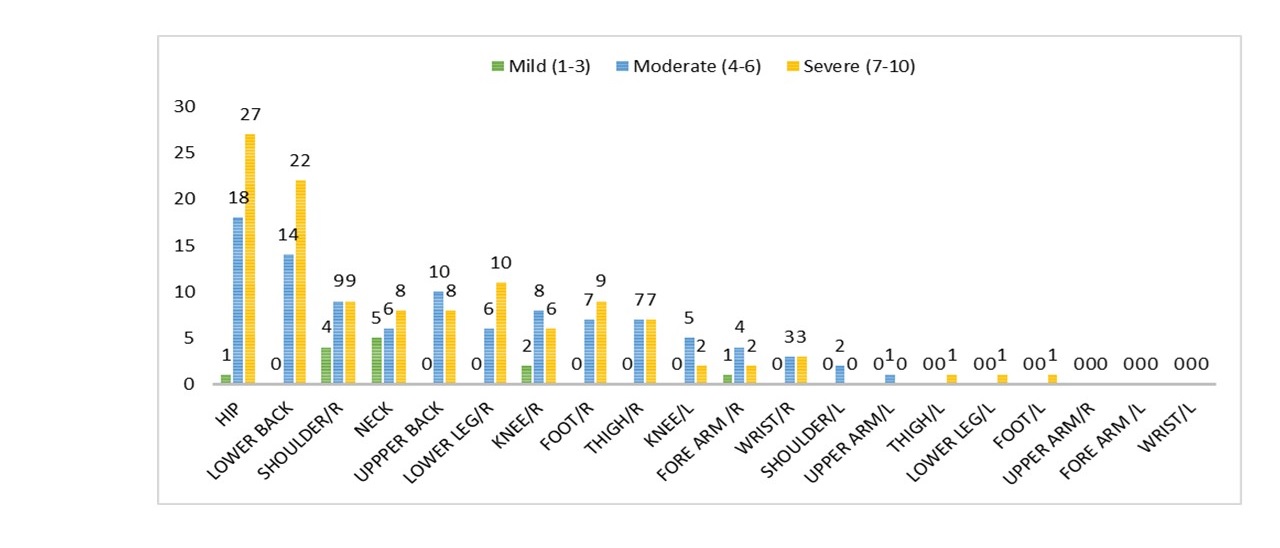
Fig. 1. Visual Analogue Scale (VAS) score for different body parts (n = 300)
Discussion
In this cross-sectional study of rural working women aged 30–60 years in a South Indian panchayat area, the prevalence of MSD was 76.33% (229 of 300 women).
Both the CMDQ and VAS identified the hip and lower back as the two most painful areas. The third most painful site differed between the tools, with the CMDQ identifying the right lower leg and the VAS identifying the right shoulder. This disparity, and the difference in the reported hip prevalence between the CMDQ (22.66%) and VAS (15.33%), reflects differences in methodology: the CMDQ records discomfort across twenty body regions over the preceding workweek, providing a more detailed cumulative picture, whereas the VAS asks participants to indicate only the single most painful area at the time of assessment. Consequently, the CMDQ can capture bilateral and multiple-site pain, whereas the VAS restricts responses to one site, resulting in a mismatch in reported pain locations and prevalence.
Using the CMDQ, 76.33% of the participants were found to have experienced MSD. Comparable findings have been reported in rural South India: a study in Chennai among rural women involved in household activities reported a prevalence of 75.75% [17], and among women working in tea factories in the Nilgiris, work-related MSD most frequently affected the lower back (87.5%), neck (80%), hips (80%), and shoulders (60%) [18]. These comparison populations share a rural South Indian, manual-labour profile broadly similar to that of the present sample, although differences in specific tasks and socioeconomic conditions may affect direct comparability. The high prevalence across these studies has been linked to mechanical stress on muscles and tendons and to awkward postures during lifting, reaching above shoulder level, and carrying or pushing heavy loads—exposures consistent with those of the present study.
A study by Das (2022) among brick moulders—a workforce that, unlike the present all-female agricultural sample, is predominantly male and engaged in higher-intensity upper-limb work—reported a higher MSD prevalence of 96.5%, predominantly affecting the hand, shoulder, wrist, and fingers [19]. This comparison should be interpreted with caution given the differences in sex distribution and work intensity; the elevated upper-limb pain among brick moulders likely reflects the constant, intensive use of the arms and hands intrinsic to that occupation.
In the present study, the most frequently reported sites were the hips, lower back, and right shoulder. By contrast, a cross-sectional study of women in the software industry found a 67% MSD prevalence, with the neck (65.0%), lower back (62.6%), and upper back (56.4%) being the most affected [20]. These differences in pain distribution can be attributed to differing occupational demands: software employees engage in prolonged sedentary work in fixed sitting postures, whereas rural women perform labour-intensive tasks involving frequent bending, lifting, and repetitive upper-body movements at ground level, increasing strain on the hips, lower back, and right shoulder. A study of teachers in Terengganu, Malaysia, similarly reported the highest MSD prevalence in the foot (32.5%), attributed to prolonged standing [21].
A binary logistic regression analysis showed that the examined body sites were not significantly associated with musculoskeletal pain. Although positive associations were observed, they were not statistically significant. These observations indicate that musculoskeletal pain may be attributed to interactions among occupational, ergonomic, nutritional, and personal factors rather than to pain in any particular body site.
In the present study, the proportion of women rating discomfort as “very uncomfortable” increased significantly with age. This is consistent with Krishnan et al. [22], who reported that nurses frequently experienced severe pain in the lower back and shoulders, with severity increasing with age. Age-related physiological changes may contribute to increased pain sensitivity: older adults more often experience chronic conditions such as arthritis and osteoporosis, while changes in nervous-system pain processing, reduced physical activity, and psychological factors such as low mood and social isolation can amplify pain perception [23].
Because the sample spanned 30–60 years, the greater discomfort in older women may partly reflect peri- and post-menopausal changes, including declining oestrogen, increased inflammation, and loss of muscle mass and strength, which can heighten susceptibility to musculoskeletal discomfort [24,25]. However, menopausal status was not assessed in this study; this mechanism therefore remains a hypothesis rather than a demonstrated explanation and should be interpreted with caution.
The VAS results revealed severe pain in the lower back and shoulder regions among the rural working women. Similarly, a study carried out among female farmers in the Kashmir Valley in India found the lower back (68.78%) to be the most affected area, while the shoulder area came second (62.94%). The prevalence of MSD (74.74%) in that study was almost the same as in the current study. This implies that the lower back and shoulder areas may be more susceptible when females are exposed to heavy physical labour in farming activities [26].
The absence of a significant association between BMI and pain should be interpreted cautiously. Although obese women had the highest mean pain score (158.92), the study may have been underpowered to detect a
small-to-moderate effect of BMI, raising the possibility of a type II error. Furthermore, predictors of MSD were not modelled, and the agreement between the CMDQ and VAS was not formally tested; correlation analysis (e.g., Spearman correlation between CMDQ and VAS scores) and multivariable regression to identify predictors of MSD would strengthen future work.
Overall, this study emphasizes that MSD is highly prevalent among rural working women. This highlights the importance of effective preventive strategies—including ergonomic improvements, appropriate workplace adjustments, regular exercise, and awareness programmes on safe work practices—to reduce the risk and adverse effects of MSD.
This study has several limitations. Its cross-sectional design precludes causal inference about the relationship between occupational activity and MSD. MSD was based on self-reported discomfort over the preceding week, which is subject to recall bias, and the standing-worker version of the CMDQ was used although not all tasks were performed in a standing posture. Occupational exposure was not measured objectively (for example, by direct observation of postures or load weights), and potential confounders such as domestic workload, parity, and socioeconomic status were not adjusted for. Menopausal status and nutritional intake were not assessed. Finally, some participants appeared hesitant during data collection, which may have affected the accuracy of their responses.
Conclusion
This study reveals a high prevalence of MSD (76%) among daily-wage working women in the selected rural area, with the hip being the most affected and most disabling region. Increasing age was associated with greater pain severity and work interference, but not with pain frequency, whereas BMI showed no significant association with MSD. These findings underscore the need for ergonomic interventions, workplace adjustments, and awareness programmes targeting this vulnerable workforce.
Acknowledgments
The authors extend their gratitude to the residents of Cheyyur, Chengalpattu district, for their cooperation in facilitating this study.
Conflict of interest
None declared.
Funding
Junior Research Fellowship granted by the University Grants Commission, India.
Ethical Considerations
Written informed consent was obtained from all participants, and the study was conducted in accordance with the Declaration of Helsinki.
Code of Ethics
The study protocol was approved by the Institutional Ethics Committee (Ref: IEC/23/FEB/177/01) on 06.06.2024 and was registered with the Clinical Trials Registry – India (CTRI; Ref: REF/2022/11/060370).
Authors' Contributions
Kamalish Manoharan: Conceptualization, Methodology, Data Curation, Writing - Original Draft and Editing; Gayathri Gopakumar: Supervision, Conceptualization, Formal analysis, Writing - Review & Editing; Vanishree Shriraam: Supervision, Writing - Review & Editing; Alex Joseph: Supervision, Formal analysis, Writing - Review & Editing; Mohamed Sameer: Supervision, Writing - Review & Editing.
Full-Text: (5 Views)
Introduction
Working women across the globe commonly experience MSD, largely as a result of their occupational activities. Jobs that involve repetitive motions, heavy lifting,
prolonged sitting, or prolonged standing can place significant strain on muscles, joints, and the spine, leading to discomfort or pain. This issue is prevalent across a wide range of industries, from manual labour to office work. Over time, cumulative physical stress can result in chronic conditions or injuries, affecting both productivity and overall quality of life [1,2].
Muscle pain, stiffness, or discomfort affecting the bones, tendons, ligaments, muscles, or other parts of the musculoskeletal system is referred to as musculoskeletal discomfort [3,4]. MSD can arise from several sources, including poor posture, sustained physical activity without rest, and psychological stress. Job demands, workplace ergonomics, individual characteristics, and cultural background all influence its occurrence. Factors reported to aggravate MSD include age, smoking and drinking habits, job insecurity, and adverse working conditions [5,6].
Treatment for musculoskeletal conditions accounts for substantial out-of-pocket expenditure, ranking among the leading contributors after cardiovascular disease [7]. High rates of MSD have been documented across multiple occupational categories worldwide, including office employees, healthcare professionals, and manual labourers [8–10].
Women are reported to be more susceptible to MSD than men. Excess body weight has been proposed as one contributing factor, as it may place additional strain on the muscles and joints and increase the risk of discomfort, pain, and long-term damage [11]. This study therefore focused on women, given their reported higher susceptibility to MSD relative to men.
In South India, where increasing numbers of women are entering the workforce, understanding the prevalence of musculoskeletal pain and its impact on general well-being is important. Although MSD among occupational groups such as office and factory workers has been examined in India, evidence specific to rural agricultural daily-wage women—who constitute a substantial part of the South Indian workforce yet face distinct ergonomic exposures such as prolonged bending, squatting, and head-load carrying—remains limited. Most existing South Indian studies have focused on household or factory settings rather than open-field agricultural labour, and few have simultaneously characterized the frequency, severity, and work interference of discomfort using a standardized instrument.
Accordingly, this study was undertaken to investigate the prevalence of MSD and the body regions most affected among farm-working women in a panchayat area of Tamil Nadu, a South Indian state, thereby addressing this gap in the literature.
Materials and Methods
This community-based cross-sectional study was conducted during October and November 2024 in Cheyyur panchayat, located in the Lathur block of Chengalpattu district, Tamil Nadu, India. Cheyyur panchayat comprises eight distinct villages.
Participants were drawn from all eight villages of
Cheyyur panchayat. The number of participants from each village was allocated by probability proportionate to size (PPS), and within each village, eligible women were selected by systematic random sampling from the line list of resident women labourers maintained by the local health functionary.
Women aged 30–60 years who were engaged as daily-wage agricultural labourers were eligible. A daily-wage agricultural labourer was operationally defined as a woman paid on a daily basis for farm work and engaged in such work for at least 15 days per month. Their routine occupational tasks included land preparation, transplanting, weeding, harvesting, manual cleaning, carrying head-loads, and prolonged bending and squatting at ground level. Pregnant women and those with a known physical disability or a previously diagnosed musculoskeletal condition were excluded.
The questionnaire was interviewer-administered by the principal investigator in the local language (Tamil) to minimize literacy-related response errors, as a substantial proportion of participants were illiterate. The questionnaire comprised three sections.
The first section captured the general characteristics of participants, including age, hours of work, BMI, and education level.
The second section was the standing-worker female version of the CMDQ. The CMDQ has demonstrated high reliability for assessing MSD [12]. It comprises three components: frequency of discomfort (0 (never), 1.5 (1–2 times/week), 3.5 (3–4 times/week), 5 (once every day), and 10 (several times every day)); severity of discomfort (1 (slightly uncomfortable), 2 (moderately uncomfortable), and 3 (very uncomfortable)); and interference with work due to discomfort (1 (not at all), 2 (slightly interfered), and 3 (substantially interfered)) across twenty body regions. Component scores and an overall pain score were calculated in accordance with the guidelines of Hedge et al. [13]. The standing-worker version was used because standing, bending, and squatting were the predominant working postures in this population; the implications of this choice are noted in the Limitations. The CMDQ was translated into Tamil using a forward-backward translation process to maintain semantic equivalence. The translated version was evaluated by a group of six experts regarding content, clarity, and cultural sensitivity, and slight changes were made to the language based on the feedback received from the experts. A pilot test was conducted among subjects with characteristics similar to those of the study population.
The third section was the VAS, which measures pain intensity and is an internationally validated tool for pain assessment [14]. Pain was rated on a 0–10 numbered scale with anchored verbal descriptors and a pictorial pain scale to standardize interpretation, and was categorized as none (0), mild (1–3), moderate (4–6), or
severe (7–10) [15].
Using both the CMDQ and VAS provided a comprehensive assessment of musculoskeletal pain perception: the CMDQ provides qualitative information on the frequency, severity, and work interference of pain, whereas the VAS provides a quantitative measure of pain intensity at the time of assessment.
A study conducted in the Kancheepuram district of Tamil Nadu reported the prevalence of MSD as 58% [16]. This prevalence was used to calculate the sample size using the formula:
Formula 1.
N = 3.84 × p × q / L²
where p = expected prevalence (58%), q = 100 − p (42%), and L = relative precision (taken as 10% of p). A relative precision of 10% was chosen to balance statistical precision with field feasibility; a stricter 5% relative precision would have increased the required sample size to more than 1,100 women, which was not feasible within the study’s available resources. Substituting the values:
Formula 2.
N = (3.84 × 58 × 42) / 33.64 ≈ 283
The sample size was rounded to 300.
Data were analyzed using IBM SPSS Statistics version 22.0. Continuous variables were summarized as mean ± standard deviation (SD), while categorical variables were summarized as frequencies and percentages. Because overall pain scores were highly skewed and showed wide dispersion, non-parametric tests were used to compare scores across age and BMI groups, including the Mann–Whitney U test for two-group comparisons and the Kruskal–Wallis test for three-group comparisons. Chi-square and logistic regression analyses were also conducted, with results expressed as odds ratios (ORs). A p-value < 0.05 was considered statistically significant.
Results
The study included 300 women who were daily-wage workers, with a mean age of 45.13 years and an average working duration of 6.5 hours per day. The mean BMI was 28.38 kg/m², indicating an overweight category. Regarding education, 38.33% were illiterate, 21.33% had completed high school, and 16% had studied up to the higher secondary level (Table 1).
Working women across the globe commonly experience MSD, largely as a result of their occupational activities. Jobs that involve repetitive motions, heavy lifting,
prolonged sitting, or prolonged standing can place significant strain on muscles, joints, and the spine, leading to discomfort or pain. This issue is prevalent across a wide range of industries, from manual labour to office work. Over time, cumulative physical stress can result in chronic conditions or injuries, affecting both productivity and overall quality of life [1,2].
Muscle pain, stiffness, or discomfort affecting the bones, tendons, ligaments, muscles, or other parts of the musculoskeletal system is referred to as musculoskeletal discomfort [3,4]. MSD can arise from several sources, including poor posture, sustained physical activity without rest, and psychological stress. Job demands, workplace ergonomics, individual characteristics, and cultural background all influence its occurrence. Factors reported to aggravate MSD include age, smoking and drinking habits, job insecurity, and adverse working conditions [5,6].
Treatment for musculoskeletal conditions accounts for substantial out-of-pocket expenditure, ranking among the leading contributors after cardiovascular disease [7]. High rates of MSD have been documented across multiple occupational categories worldwide, including office employees, healthcare professionals, and manual labourers [8–10].
Women are reported to be more susceptible to MSD than men. Excess body weight has been proposed as one contributing factor, as it may place additional strain on the muscles and joints and increase the risk of discomfort, pain, and long-term damage [11]. This study therefore focused on women, given their reported higher susceptibility to MSD relative to men.
In South India, where increasing numbers of women are entering the workforce, understanding the prevalence of musculoskeletal pain and its impact on general well-being is important. Although MSD among occupational groups such as office and factory workers has been examined in India, evidence specific to rural agricultural daily-wage women—who constitute a substantial part of the South Indian workforce yet face distinct ergonomic exposures such as prolonged bending, squatting, and head-load carrying—remains limited. Most existing South Indian studies have focused on household or factory settings rather than open-field agricultural labour, and few have simultaneously characterized the frequency, severity, and work interference of discomfort using a standardized instrument.
Accordingly, this study was undertaken to investigate the prevalence of MSD and the body regions most affected among farm-working women in a panchayat area of Tamil Nadu, a South Indian state, thereby addressing this gap in the literature.
Materials and Methods
This community-based cross-sectional study was conducted during October and November 2024 in Cheyyur panchayat, located in the Lathur block of Chengalpattu district, Tamil Nadu, India. Cheyyur panchayat comprises eight distinct villages.
Participants were drawn from all eight villages of
Cheyyur panchayat. The number of participants from each village was allocated by probability proportionate to size (PPS), and within each village, eligible women were selected by systematic random sampling from the line list of resident women labourers maintained by the local health functionary.
Women aged 30–60 years who were engaged as daily-wage agricultural labourers were eligible. A daily-wage agricultural labourer was operationally defined as a woman paid on a daily basis for farm work and engaged in such work for at least 15 days per month. Their routine occupational tasks included land preparation, transplanting, weeding, harvesting, manual cleaning, carrying head-loads, and prolonged bending and squatting at ground level. Pregnant women and those with a known physical disability or a previously diagnosed musculoskeletal condition were excluded.
The questionnaire was interviewer-administered by the principal investigator in the local language (Tamil) to minimize literacy-related response errors, as a substantial proportion of participants were illiterate. The questionnaire comprised three sections.
The first section captured the general characteristics of participants, including age, hours of work, BMI, and education level.
The second section was the standing-worker female version of the CMDQ. The CMDQ has demonstrated high reliability for assessing MSD [12]. It comprises three components: frequency of discomfort (0 (never), 1.5 (1–2 times/week), 3.5 (3–4 times/week), 5 (once every day), and 10 (several times every day)); severity of discomfort (1 (slightly uncomfortable), 2 (moderately uncomfortable), and 3 (very uncomfortable)); and interference with work due to discomfort (1 (not at all), 2 (slightly interfered), and 3 (substantially interfered)) across twenty body regions. Component scores and an overall pain score were calculated in accordance with the guidelines of Hedge et al. [13]. The standing-worker version was used because standing, bending, and squatting were the predominant working postures in this population; the implications of this choice are noted in the Limitations. The CMDQ was translated into Tamil using a forward-backward translation process to maintain semantic equivalence. The translated version was evaluated by a group of six experts regarding content, clarity, and cultural sensitivity, and slight changes were made to the language based on the feedback received from the experts. A pilot test was conducted among subjects with characteristics similar to those of the study population.
The third section was the VAS, which measures pain intensity and is an internationally validated tool for pain assessment [14]. Pain was rated on a 0–10 numbered scale with anchored verbal descriptors and a pictorial pain scale to standardize interpretation, and was categorized as none (0), mild (1–3), moderate (4–6), or
severe (7–10) [15].
Using both the CMDQ and VAS provided a comprehensive assessment of musculoskeletal pain perception: the CMDQ provides qualitative information on the frequency, severity, and work interference of pain, whereas the VAS provides a quantitative measure of pain intensity at the time of assessment.
A study conducted in the Kancheepuram district of Tamil Nadu reported the prevalence of MSD as 58% [16]. This prevalence was used to calculate the sample size using the formula:
Formula 1.
N = 3.84 × p × q / L²
where p = expected prevalence (58%), q = 100 − p (42%), and L = relative precision (taken as 10% of p). A relative precision of 10% was chosen to balance statistical precision with field feasibility; a stricter 5% relative precision would have increased the required sample size to more than 1,100 women, which was not feasible within the study’s available resources. Substituting the values:
Formula 2.
N = (3.84 × 58 × 42) / 33.64 ≈ 283
The sample size was rounded to 300.
Data were analyzed using IBM SPSS Statistics version 22.0. Continuous variables were summarized as mean ± standard deviation (SD), while categorical variables were summarized as frequencies and percentages. Because overall pain scores were highly skewed and showed wide dispersion, non-parametric tests were used to compare scores across age and BMI groups, including the Mann–Whitney U test for two-group comparisons and the Kruskal–Wallis test for three-group comparisons. Chi-square and logistic regression analyses were also conducted, with results expressed as odds ratios (ORs). A p-value < 0.05 was considered statistically significant.
Results
The study included 300 women who were daily-wage workers, with a mean age of 45.13 years and an average working duration of 6.5 hours per day. The mean BMI was 28.38 kg/m², indicating an overweight category. Regarding education, 38.33% were illiterate, 21.33% had completed high school, and 16% had studied up to the higher secondary level (Table 1).
Table 1. General characteristics of participants (n = 300)
| Characteristics | Mean ± SD / n (%) |
| Age (years) | 45.13 ± 8.56 |
| Hours of work per day | 6.5 ± 1.12 |
| BMI (kg/m²) | 28.38 ± 3.73 |
| Education — Illiterate | 115 (38.33%) |
| Education — Primary | 28 (9.33%) |
| Education — High school | 64 (21.33%) |
| Education — Higher secondary | 48 (16%) |
| Education — Bachelor/Diploma | 45 (15%) |
SD, standard deviation; BMI, body mass index. Education categories sum to 300
Each participant could report discomfort in more than one body region; therefore, the percentages are not mutually exclusive and do not sum to 100%. R, right; L, left.
A total of 111 (37%) participants reported experiencing pain several times a day in one or more body parts. The most affected areas were the right foot (14%), right shoulder (12.66%), and hip (12.66%). Severe discomfort (“very uncomfortable”) was reported by 186 (62%) participants, most commonly in the hip (22.66%), lower back (22.33%), and right lower leg (17%). In addition, 116 (38.66%) women reported that pain in one or more regions substantially interfered with their work capacity, principally at the hip (22.66%), lower back (14.33%), and lower leg (7.33%).
Notably, although hip pain was reported several times a day by 12.66% of women, a larger proportion (22.66%) rated hip discomfort as substantially interfering with their work. This finding indicates that hip pain, although not the most frequent complaint, was perceived as the most disabling (Table 2).
.
Table 2. Frequency, severity, and work-interference of discomfort by body region using the CMDQ (n = 300)
| Body Part | Several Times/Days n (%) |
Very Uncomfortable n (%) |
Substantially Interfered n (%) |
| Neck | 35 (11.66) | 42 (14) | 17 (5.66) |
| Shoulder/R | 38 (12.66) | 48 (16) | 12 (4) |
| Shoulder/L | 31 (10.33) | 39 (13) | 12 (4) |
| Upper Back | 24 (8) | 48 (16) | 16 (5.33) |
| Upper Arm/R | 28 (9.33) | 26 (8.66) | 9 (3) |
| Upper Arm/L | 28 (9.33) | 20 (6.66) | 9 (3) |
| Lower Back | 22 (7.33) | 67 (22.33) | 43 (14.33) |
| Fore Arm/R | 17 (5.66) | 30 (10) | 9 (3) |
| Fore Arm/L | 14 (4.66) | 19 (6.33) | 6 (2) |
| Wrist/R | 15 (5) | 22 (7.33) | 7 (2.33) |
| Wrist/L | 14 (4.66) | 18 (6) | 6 (2) |
| Hip | 38 (12.66) | 68 (22.66) | 68 (22.66) |
| Thigh/R | 23 (7.66) | 38 (12.66) | 11 (3.66) |
| Thigh/L | 18 (6) | 25 (8.33) | 8 (2.66) |
| Knee/R | 20 (6.66) | 48 (16) | 16 (5.33) |
| Knee/L | 20 (6.66) | 34 (11.33) | 16 (5.33) |
| Lower Leg/R | 25 (8.33) | 51 (17) | 22 (7.33) |
| Lower Leg/L | 19 (6.33) | 38 (12) | 16 (5.33) |
| Foot/R | 42 (14) | 41 (13.66) | 16 (5.33) |
| Foot/L | 37 (12.33) | 31 (10.33) | 11 (3.66) |
Table 3 shows the association of age and BMI with the frequency, severity, and work-interference dimensions of discomfort. Severity (“very uncomfortable”) and work interference were significantly higher among women aged 46–60 years than among those aged 30–45 years (p < 0.001 and p = 0.006, respectively), whereas the frequency of pain did not differ significantly by age (p = 0.153). None of the three dimensions differed significantly across BMI categories (all p > 0.05). Thus, increasing age was associated with greater pain severity and work interference, but not with pain frequency, while BMI showed no significant association with any dimension.
Table 3. Association of Age and BMI with Pain
| Baseline Characteristics | Several Times/Day n (%) | P-Value | Very Uncomfortable n (%) | P-Value | Interference of Work n (%) | P-Value | |
| Age (Years) | 30–45 | 51 (17) | 0.153 | 78 (26) | <0.001* | 48 (31.2) | 0.006* |
| 46–60 | 60 (20) | 108 (36) | 68 (46.6) | ||||
| BMI (kg/m²) | 18.5–24.99 | 23 (7.6) | 0.768 | 43 (62.3) | 0.653 | 23 (33.3) | 0.584 |
| 25–29.99 | 48 (16) | 82 (64.6) | 51 (40.2) | ||||
| ≥ 30 | 40 (13.33) | 61 (58.7) | 42 (40.4) | ||||
* P < 0.05 (chi-square test). Age was analysed as two categories rather than as a continuous variable.
Results from the logistic regression analysis revealed no significant associations between any of the body regions and musculoskeletal pain. The likelihood of experiencing musculoskeletal pain in the hip (OR = 1.071, p = 0.802), lower back (OR = 1.299, p = 0.347), and right lower leg (OR = 1.118, p = 0.717) was not statistically significant (Table 4).
Table 4. Association of Body Region with Musculoskeletal Discomfort and Logistic Regression Outcomes
| Body Region | Prevalence (%) | Chi-square (p-value) | Odds Ratio (OR) | 95% CI | P-value |
| Hip | 22.7 | 0.802 | 1.071 | 0.89–1.28 | 0.802 |
| Lower back | 22.3 | 0.347 | 1.299 | 0.88–1.93 | 0.347 |
| Right lower leg | 17.0 | 0.717 | 1.118 | 0.87–1.44 | 0.717 |
Abbreviations: OR = Odds Ratio; CI = Confidence Interval. A p-value < 0.05 was considered statistically significant.
Fig. 1 illustrates the VAS scores, highlighting the areas of pain experienced by the participants. The hip was the most frequently reported site of severe pain (15.33%), followed by the lower back (12%) and the right shoulder (7.33%).
Fig. 1. Visual Analogue Scale (VAS) score for different body parts (n = 300)
Discussion
In this cross-sectional study of rural working women aged 30–60 years in a South Indian panchayat area, the prevalence of MSD was 76.33% (229 of 300 women).
Both the CMDQ and VAS identified the hip and lower back as the two most painful areas. The third most painful site differed between the tools, with the CMDQ identifying the right lower leg and the VAS identifying the right shoulder. This disparity, and the difference in the reported hip prevalence between the CMDQ (22.66%) and VAS (15.33%), reflects differences in methodology: the CMDQ records discomfort across twenty body regions over the preceding workweek, providing a more detailed cumulative picture, whereas the VAS asks participants to indicate only the single most painful area at the time of assessment. Consequently, the CMDQ can capture bilateral and multiple-site pain, whereas the VAS restricts responses to one site, resulting in a mismatch in reported pain locations and prevalence.
Using the CMDQ, 76.33% of the participants were found to have experienced MSD. Comparable findings have been reported in rural South India: a study in Chennai among rural women involved in household activities reported a prevalence of 75.75% [17], and among women working in tea factories in the Nilgiris, work-related MSD most frequently affected the lower back (87.5%), neck (80%), hips (80%), and shoulders (60%) [18]. These comparison populations share a rural South Indian, manual-labour profile broadly similar to that of the present sample, although differences in specific tasks and socioeconomic conditions may affect direct comparability. The high prevalence across these studies has been linked to mechanical stress on muscles and tendons and to awkward postures during lifting, reaching above shoulder level, and carrying or pushing heavy loads—exposures consistent with those of the present study.
A study by Das (2022) among brick moulders—a workforce that, unlike the present all-female agricultural sample, is predominantly male and engaged in higher-intensity upper-limb work—reported a higher MSD prevalence of 96.5%, predominantly affecting the hand, shoulder, wrist, and fingers [19]. This comparison should be interpreted with caution given the differences in sex distribution and work intensity; the elevated upper-limb pain among brick moulders likely reflects the constant, intensive use of the arms and hands intrinsic to that occupation.
In the present study, the most frequently reported sites were the hips, lower back, and right shoulder. By contrast, a cross-sectional study of women in the software industry found a 67% MSD prevalence, with the neck (65.0%), lower back (62.6%), and upper back (56.4%) being the most affected [20]. These differences in pain distribution can be attributed to differing occupational demands: software employees engage in prolonged sedentary work in fixed sitting postures, whereas rural women perform labour-intensive tasks involving frequent bending, lifting, and repetitive upper-body movements at ground level, increasing strain on the hips, lower back, and right shoulder. A study of teachers in Terengganu, Malaysia, similarly reported the highest MSD prevalence in the foot (32.5%), attributed to prolonged standing [21].
A binary logistic regression analysis showed that the examined body sites were not significantly associated with musculoskeletal pain. Although positive associations were observed, they were not statistically significant. These observations indicate that musculoskeletal pain may be attributed to interactions among occupational, ergonomic, nutritional, and personal factors rather than to pain in any particular body site.
In the present study, the proportion of women rating discomfort as “very uncomfortable” increased significantly with age. This is consistent with Krishnan et al. [22], who reported that nurses frequently experienced severe pain in the lower back and shoulders, with severity increasing with age. Age-related physiological changes may contribute to increased pain sensitivity: older adults more often experience chronic conditions such as arthritis and osteoporosis, while changes in nervous-system pain processing, reduced physical activity, and psychological factors such as low mood and social isolation can amplify pain perception [23].
Because the sample spanned 30–60 years, the greater discomfort in older women may partly reflect peri- and post-menopausal changes, including declining oestrogen, increased inflammation, and loss of muscle mass and strength, which can heighten susceptibility to musculoskeletal discomfort [24,25]. However, menopausal status was not assessed in this study; this mechanism therefore remains a hypothesis rather than a demonstrated explanation and should be interpreted with caution.
The VAS results revealed severe pain in the lower back and shoulder regions among the rural working women. Similarly, a study carried out among female farmers in the Kashmir Valley in India found the lower back (68.78%) to be the most affected area, while the shoulder area came second (62.94%). The prevalence of MSD (74.74%) in that study was almost the same as in the current study. This implies that the lower back and shoulder areas may be more susceptible when females are exposed to heavy physical labour in farming activities [26].
The absence of a significant association between BMI and pain should be interpreted cautiously. Although obese women had the highest mean pain score (158.92), the study may have been underpowered to detect a
small-to-moderate effect of BMI, raising the possibility of a type II error. Furthermore, predictors of MSD were not modelled, and the agreement between the CMDQ and VAS was not formally tested; correlation analysis (e.g., Spearman correlation between CMDQ and VAS scores) and multivariable regression to identify predictors of MSD would strengthen future work.
Overall, this study emphasizes that MSD is highly prevalent among rural working women. This highlights the importance of effective preventive strategies—including ergonomic improvements, appropriate workplace adjustments, regular exercise, and awareness programmes on safe work practices—to reduce the risk and adverse effects of MSD.
This study has several limitations. Its cross-sectional design precludes causal inference about the relationship between occupational activity and MSD. MSD was based on self-reported discomfort over the preceding week, which is subject to recall bias, and the standing-worker version of the CMDQ was used although not all tasks were performed in a standing posture. Occupational exposure was not measured objectively (for example, by direct observation of postures or load weights), and potential confounders such as domestic workload, parity, and socioeconomic status were not adjusted for. Menopausal status and nutritional intake were not assessed. Finally, some participants appeared hesitant during data collection, which may have affected the accuracy of their responses.
Conclusion
This study reveals a high prevalence of MSD (76%) among daily-wage working women in the selected rural area, with the hip being the most affected and most disabling region. Increasing age was associated with greater pain severity and work interference, but not with pain frequency, whereas BMI showed no significant association with MSD. These findings underscore the need for ergonomic interventions, workplace adjustments, and awareness programmes targeting this vulnerable workforce.
Acknowledgments
The authors extend their gratitude to the residents of Cheyyur, Chengalpattu district, for their cooperation in facilitating this study.
Conflict of interest
None declared.
Funding
Junior Research Fellowship granted by the University Grants Commission, India.
Ethical Considerations
Written informed consent was obtained from all participants, and the study was conducted in accordance with the Declaration of Helsinki.
Code of Ethics
The study protocol was approved by the Institutional Ethics Committee (Ref: IEC/23/FEB/177/01) on 06.06.2024 and was registered with the Clinical Trials Registry – India (CTRI; Ref: REF/2022/11/060370).
Authors' Contributions
Kamalish Manoharan: Conceptualization, Methodology, Data Curation, Writing - Original Draft and Editing; Gayathri Gopakumar: Supervision, Conceptualization, Formal analysis, Writing - Review & Editing; Vanishree Shriraam: Supervision, Writing - Review & Editing; Alex Joseph: Supervision, Formal analysis, Writing - Review & Editing; Mohamed Sameer: Supervision, Writing - Review & Editing.
References
1. Fazli B, Ansari H, Noorani M, Jafari SM, Sharifpoor Z, Ansari S. The prevalence of musculoskeletal disorders and its predictors among Iranians’ Housewives. Int J Epidemiol Res. 2016;3(1):53-62.
2. Ravichandran SP, Shah PB, Lakshminarayanan K, Ravichandran AP. Musculoskeletal problems among workers in a garment industry, at Tirupur, Tamil Nadu. Indian J Community Health. 2016;28(3):269-74. [URL]
3. World Health Organization. Musculoskeletal health. Geneva, Switzerland: World Health Organization; 2022. [URL]
4. Smith BE, Hendrick P, Smith TO, Bateman M, Moffatt F, Rathleff MS, et al. Should exercises be painful in the management of chronic musculoskeletal pain? A systematic review and meta-analysis. Br J Sports Med. 2017;51(23):1679-87. [DOI] [PMID] [PMCID]
5. Sharma NK, Tiwari M, Thakur A, Ganguli AK. An ergonomic study of the cleaning workers to identify the prevalence of musculoskeletal disorders in India. In: Rana NK, Shah AA, Iqbal R, Khanzode V, eds. Technology Enabled Ergonomic Design. Proceedings of the Humanizing Work and Work Environment; 2020 Dec 10-12; Boisar, Mumbai, Indian; Singapore: Springer Nature Singapore; 2022. p.33-46. [DOI]
6. Bezzina A, Austin E, Nguyen H, James C. Workplace psychosocial factors and their association with musculoskeletal disorders: a systematic review of longitudinal studies. Workplace Health Saf. 2023;71(12):578-88. [DOI] [PMID] [PMCID]
7. Menon GR, Yadav J, John D. Burden of non-communicable diseases and its associated economic costs in India. Soc Sci Humanit Open. 2022;5(1):100256. [DOI]
8. Bairwa RC, Meena ML, Dangayach GS, Jain R. Prevalence of Musculoskeletal Disorders among the Agricultural Workers: A Review. In: Chakrabarti, D., Karmakar, S., Salve, U.R. (eds). Ergonomics for Design and Innovation. Proceedings of the Humanizing Work and Work Environment; 2021 Dec 1-3; Guwahati, India; Lecture Notes in Networks and Systems. Vol 391. Springer, Cham. 2022;439-46. [DOI]
9. El-Tallawy SN, Nalamasu R, Salem GI, LeQuang JAK, Pergolizzi JV, Christo PJ. Management of musculoskeletal pain: an update with emphasis on chronic musculoskeletal pain. Pain Ther. 2021;10(1):181-209. [DOI] [PMID] [PMCID]
10. Blyth FM, Briggs AM, Schneider CH, Hoy DG, March LM. The global burden of musculoskeletal pain - where to from here? Am J Public Health. 2019;109(1):35-40. [DOI] [PMID] [PMCID]
11. Hart DA. Sex differences in musculoskeletal injury and disease risks across the lifespan: Are there unique subsets of females at higher risk than males for these conditions at distinct stages of the life cycle? Front Physiol. 2023;14:1127689. [DOI] [PMID] [PMCID]
12. Erdinc O, Hot K, Ozkaya M. Turkish version of the Cornell Musculoskeletal Discomfort Questionnaire: cross-cultural adaptation and validation. Work. 2011;39(3):251-60. [DOI] [PMID]
13. Cornell University Ergonomics Web. Cornell Musculoskeletal Discomfort Questionnaires (CMDQ). Ithaca, New York, United States: Cornell University; 1999.
14. Begum MR, Hossain MA. Validity and reliability of visual analogue scale (VAS) for pain measurement. J Med Case Rep Rev. 2019;2(11):394-402. [URL]
15. Yale University. Visual Analogue Scale [Internet]. New Haven, Connecticut, United States: Yale University; [cited 2026 Feb 20]. Available from: https://assessment-module.yale.edu/im-palliative/visual-analogue-scale
16. Subramanian SS. Musculoskeletal disorders among rural population in south India – cross sectional analysis. Med Res Chron. 2017;4(3):338-45. [URL]
17. Varghese JG, Priya GA, Balaji AJ. Risk Factors Contributing to Non-Traumatic Soft Tissue Injuries of hand in rural South Indian Female Population. Res J Pharm Technol. 2017;10(10):3289-93. [DOI]
18. Devi MG, Vats A. Prevalence of work-related musculoskeletal disorders among women tea factory workers of Nilgiri: An ergonomic study. J Appl Nat Sci. 2018;10(3):990-4.
19. Das B. Prevalence and associated risk factors of musculoskeletal disorders (MSDs) and physiological stress among the female brick molders of West Bengal, India. Ergonomics SA. 2022;33(1). [DOI]
20. Mishra S, Avinash G, Kundu MG, Verma J, Sheth A, Dutta A. Work-related musculoskeletal disorders among various occupational workers in India: a systematic review and meta-analysis. J Occup Health. 2024;67(1):uiae077. [DOI] [PMID] [PMCID]
21. Alias AN, Karuppiah K, How V, Perumal V. Prevalence of musculoskeletal disorders (MSDs) among primary school female teachers in Terengganu, Malaysia. Int J Ind Ergon. 2020;77:102957. [DOI]
22. Krishnan KS, Raju G, Shawkataly O. Prevalence of work-related musculoskeletal disorders: Psychological and physical risk factors. Int J Environ Res Public Health. 2021;18(17):9361. [DOI] [PMID] [PMCID]
23. Rottenberg Y, Jacobs JM, Stessman J. Prevalence of pain with advancing age: brief report. J Am Med Dir Assoc. 2015;16(3):264.e1-5. [DOI] [PMID]
25. Lu CB, Liu PF, Zhou YS, Meng FC, Qiao TY, Yang XJ, et al. Musculoskeletal pain during the menopausal transition: A systematic review and meta-analysis. Neural Plast. 2020;2020:8842110. [DOI] [PMID] [PMCID]
26. Dev A, Ganaie MI, Mayer IA, Singh H. Risk of musculoskeletal disorders in female farmers and its socioeconomic determinants in Kashmir valley. Clin Epidemiol Glob Health. 2025;31:101871. [DOI]
Send email to the article author
| Rights and permissions | |
 |
This work is licensed under a Creative Commons Attribution 4.0 International License. |