Journal of Occupational
Health and Epidemiology

Rafsanjan university Of medical sciences
Volume 14, Issue 4 (Autumn 2025)
J Occup Health Epidemiol 2025, 14(4): 286-294 |
Back to browse issues page




Download citation:
BibTeX | RIS | EndNote | Medlars | ProCite | Reference Manager | RefWorks
Send citation to:


BibTeX | RIS | EndNote | Medlars | ProCite | Reference Manager | RefWorks
Send citation to:
Saha A, Hasan M R, Hossain I, Rahman M S. Health Problems and Quality of Work Life among Brass Metal Workers in Bangladesh. , J Occup Health Epidemiol. 2025; 14 (4) :286-294
URL: http://johe.rums.ac.ir/article-1-1065-en.html
URL: http://johe.rums.ac.ir/article-1-1065-en.html
Related article in
Google Scholar
Google Scholar
Similar articles


1- M.B.B.S., M.Sc. in Public Health, Dept. of Occupational and Environmental Health, National Institute of Preventive and Social Medicine, Dhaka, Bangladesh. , abhijit92x@gmail.com
2- M.B.B.S., M.Sc. in Public Health, Dept. of Occupational and Environmental Health, National Institute of Preventive and Social Medicine, Dhaka, Bangladesh.
3- Assistant Prof., Dept. of Occupational and Environmental Health, National Institute of Preventive and Social Medicine, Dhaka, Bangladesh.
2- M.B.B.S., M.Sc. in Public Health, Dept. of Occupational and Environmental Health, National Institute of Preventive and Social Medicine, Dhaka, Bangladesh.
3- Assistant Prof., Dept. of Occupational and Environmental Health, National Institute of Preventive and Social Medicine, Dhaka, Bangladesh.
Article history

Received: 2025/06/5
Accepted: 2025/10/1
ePublished: 2025/12/13
Accepted: 2025/10/1
ePublished: 2025/12/13
Subject:
Occupational Health
Keywords: Metal Workers [MeSH], Occupational Health [MeSH], Musculoskeletal Disorders [MeSH], Quality of Life [MeSH]
Full-Text [PDF 413 kb]
(575 Downloads)
| Abstract (HTML) (1705 Views)
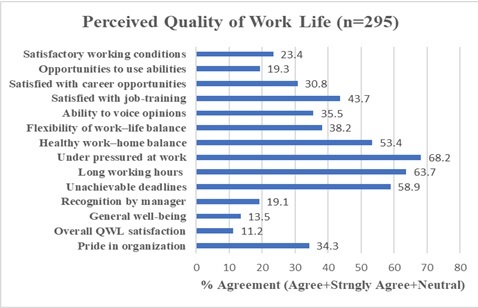
Fig. 1. Quality of work life
Table 2. Relationship between age and work experience with lower back pain (LBP) and dimness of vision (n=295)
Table 3. Sociodemographic determinants of QWL dissatisfaction (n=295)
Table 3 outlines the findings of multivariate logistic regression analysis, assessing the association between key sociodemographic variables and dissatisfaction with QWL among brass metal workers.
Analysis of factors influencing dissatisfaction with QWL among brass metal workers revealed that age was not a significant determinant, as adjusted odds ratios across age groups showed no impact on QWL dissatisfaction.
However, educational qualification played a notable role, with workers possessing higher secondary education or above exhibiting more than twice the odds of dissatisfaction (aOR=2.23, p=0.003) compared to those who had primary education or less. This suggests a potential mismatch between expectations and job conditions.
Monthly income was strongly associated with dissatisfaction, where workers who earning 10,001-15,000 Taka had 1.65 times higher odds (p=0.012) compared to those earning 5,000-10,000 Taka, and dissatisfaction was even greater among those earning above 15,000 Taka (aOR=2.72, p=0.001). This potentially reflects heightened workplace expectations among higher-income workers.
Moreover, longer work experience in the brass industry was associated with higher dissatisfaction with QWL. Workers who had 21-40 years of experience reported 2.01 times greater odds of dissatisfaction (p=0.008) compared to those with 1-20 years of experience. Similarly, workers with more than 40 years of experience exhibited 1.49 times higher odds of dissatisfaction (p=0.025).
Discussion
This study performed on 295 brass workers in Bangladesh revealed a predominantly middle-aged to elderly workforce, with a mean age of 55.81±10.75 years. A study in India observed a similar prevalence of middle-aged workers, with 86% aged 19-60 years [6]. On the other hand, other studies reported far younger workforces, with mean ages around 29 years, which contrasts with the older age group found in this study. This difference may be owing to the traditional nature of brass work in this region, where skills are passed down through generations and workers tend to remain in the profession throughout their lives [18,19].
Educational attainment varied across studies. While 52.9% of workers in this study completed secondary education, previous findings reported significantly lower education levels, with only 7.1% possessing secondary or higher education [20]. Other studies noted that only 16.67% had completed primary education highlighting regional differences in workforce qualifications [1].
Economic conditions indicate challenges, with a mean monthly income of 11,498.31±2,890.14 Taka. A similar study in India found that 53.75% of workers earned between Tk. 6000 and 12,000, with some earning more than Tk. 12,000, suggesting that respondents in the current study may have a slightly better financial standing [3].
In this study, most workers (64.06%) came from families with five or fewer members, whereas 35.94% belonged to larger households. Previous study findings indicate similar trends, with 62.5% of workers living in families of 4-6 members [1].
According to this study, 61.4% worked standard 48-hours-week, while 26.1% exceeded this threshold, indicating overtime practices. Similar studies in India reported extended work hours of 10-12 hours daily [6,10], while other study documented even longer shifts of up to 14-16 hours per day, highlighting regional labor differences [21].
Work experience also presented variation, with 47.12% in this study having 21-40 years of experience. A previous study reported shorter average tenures of around 16.3 years, with some studies documenting service periods of 5-9 years [7,8]. Further, a study in India found work experience ranging within 4-26 years, with a mean of 16.1±8.49 years, differing from the current study [22].
The similarities in age distribution and household size reflect shared socio-cultural norms as well as family structures commonly found in South Asian brass-working communities. Differences in mean age, education levels, income, and work experience are attributable to regional variations in industrialization, access to education, economic development, and labor practices. In Bangladesh, the traditional and hereditary nature of brass work leads to an older workforce with longer service durations, while in more industrialized regions, younger and more transient labor forces are employed owing to different economic and labor dynamics. Brass metal workers in Bangladesh confront several employment challenges, including long working hours, low and irregular wages, job insecurity, and hazardous working conditions with exposure to dust, fumes, heat, as well as repetitive tasks. These comparisons highlight the socio-economic and occupational challenges faced by brass industry workers.
The present study identified a significant prevalence of work-related health problems, predominantly musculoskeletal, respiratory, gastrointestinal, visual, and dermatological issues. The most commonly reported condition was lower back pain (43.7%), followed by neck and shoulder discomfort (22.7%), knee and ankle issues (18.3%), as well as hip and thigh pain (13.9%).
Comparisons with similar studies highlight both similarities and variations in health problem patterns among brass metal workers. A research in India reported comparable musculoskeletal complaints, including lumbar pain (40.91%), shoulder pain (22.73%), and knee joint pain (22.73%) [6]. Another study reported musculoskeletal pain in 55.26% of workers [1], while findings from Indonesia noted waist pain (59.6%), back pain (25%), neck pain (18.8%), and shoulder pain (28.1%) among grinding workers [23]. Some research indicated an exceptionally high lower back pain prevalence (95%) among silver filigree workers in India, significantly higher than this study’s findings, reflecting variability in physical strain across different metalworking crafts [24].
Considering respiratory health, 31.2% of respondents in this study experienced cough, 23.8% had chest tightness, and 20.7% reported a runny nose. These rates align with previous studies that reported cough (17.5%)
and shortness of breath (15.6%) [7], while other study recorded higher rates of cough (62.5%), phlegm (56.5%), and shortness of breath (51%) [25]. However, higher respiratory issues (77% overall, wheezing/shortness of breath 96%) have been reported in Bangladesh, indicating more severe respiratory hazards when compared to this study [20].
Eye problems were also prevalent, with 25.7% of workers reporting dimness of vision, a rate comparable to previous findings (18.42%) [1]. Other studies also documented tearing (20.1%) and itchy eyes (11%) [7]. Skin problems, especially skin itching (25.4%), were notable in this study, whereas earlier reports indicated moderate skin-related risks, such as paronychia (5.26%) [1].
Gastrointestinal symptoms, including constipation (23.1%) and anorexia (18.6%), were moderately present, in accordance with previous studies that reported anorexia (20.9%) and distaste (21.4%) [7]. Meanwhile, accidental injuries (6.4%) were relatively uncommon, contrasting with studies that focused on acute workplace hazards.
Brass metal workers across South Asia are constantly exposed to occupational hazards including repetitive movements, poor posture, airborne particulates, chemical agents, and insufficient protective measures. Such exposures have been implicated in the high prevalence of musculoskeletal, respiratory, visual, and dermatological disorders reported across studies. In spite of these shared risks, variations in symptom severity and prevalence may reflect differences in task specialization, workplace environments, safety protocols, and access to healthcare services. Collectively, these findings highlight the urgency of implementing context-specific interventions aimed at enhancing occupational health and improving overall quality of work life.
The current study also ascertained the perceived QWL among brass metal workers, emphasizing significant work-related stress, long working hours, and low workplace satisfaction. Comparisons with previous studies reveal both similarities and differences.
A previous study revealed prevalence of work-related stress (68.2%) and extended working hours (63.7%), in line with the findings that identified job satisfaction (r=0.733), job involvement (r=0.47), and job security (r=0.447) as significant predictors of QWL [26]. Economic struggles and poor workplace safety were also reported as contributing factors [1]. While some studies emphasise workplace policies and organisational commitment, this study underscore occupational health risks as primary concerns. High cognitive workload (84.7%) and environmental dissatisfaction (72.4%) have also been identified as QWL determinants, reinforcing the influence of workplace conditions on worker well-being [13].
Financial instability (57.97% fell within 10,001-15,000 taka only) remains a critical issue across studies. Unclear policies, inadequate resources, and lack of workplace safety have been reported as factors negatively affecting the QWL [27].
Health-related QWL assessments among Tunisian steel industry workers revealed poor Health-Related Quality of Life (HRQoL) in 49.23% for physical health and 50.77% for mental health, despite 30.8% reporting moderate to excellent work ability [28].
Nonetheless, differences exist in scope of assessment. Some studies focused on occupational hazards and respiratory risks [18], while this study ascertained broader factors, including working hours, flexibility, and managerial recognition. Strong correlations between resources and QWL have been documented, contrasting with this study’s findings of low perceived adequacy of resources [29].
These converging findings underscore systemic occupational challenges prevalent in labor-intensive sectors, particularly considering work-related stress, extended working hours, financial instability, and inadequate workplace safety. Nevertheless, notable divergences emerge in the scope and emphasis of assessment. Whereas prior studies have focused on organizational commitment and policy clarity, the present study emphasizes occupational health risks and environmental dissatisfaction as primary determinants of diminished QWL. Further, disparities in perceived resource adequacy and the breadth of evaluation, ranging from physical and mental health metrics to managerial recognition, highlight the multifactorial nature of QWL and reinforce the necessity for contextually tailored assessment frameworks.
The study was undertaken in selected districts using a cross-sectional design, which may restrict generalizability and causal interpretation. It focused on self-reported health symptoms, excluding chemical poisoning and diagnostic tests, which may potentially introduce bias. Data were collected using self-reported questionnaires and face-to-face interviews, which may have introduced recall bias and response bias owing to participants’ tendency to over- or under-report symptoms and satisfaction. Worker exposure to ergonomic stressors and hazardous materials was not measured, which could have otherwise strengthened the analysis. Data collection took place along the COVID-19 pandemic, when movement restrictions limited access to some factories and lowered the sample size. This may have introduced non-response bias and affected the representativeness of our findings. Further, cultural and limitations of tools were also present. While the questionnaire was adapted from validated instruments, it may have not fully captured the local perceptions, beliefs, and practices of brass metal workers in Bangladesh. Some items were modified to fit the cultural and occupational context, which may constrain direct comparability with studies using standardized tools in other settings. Social desirability bias may also have influenced participants’ reporting of health problems and Quality of Work Life (QWL). In spite of these limitations, the questionnaire demonstrated acceptable reliability and was validated via expert review and pilot testing, ensuring the findings are contextually appropriate and scientifically robust.
Conclusion
This study identified a high prevalence of occupational health problems and poor QWL among brass metal workers in Bangladesh. Age, work experience, education, and income were significantly linked to both health outcomes and QWL dissatisfaction. These findings highlight substantial occupational strain and socio-economic challenges confronted by this vulnerable workforce. Improving workplace ergonomics and providing regular health check-ups are essential to lowering musculoskeletal and respiratory risks among brass workers. Health education programs should be undertaken to raise awareness and encourage safer work practices. The availability and proper use of personal protective equipment, especially for respiratory and eye protection, should be prioritized. Future research should focus on longitudinal studies and environmental assessments to better understand occupational hazards and work-life quality in the brass industry.
Acknowledgments
We would like to express our gratitude to the research team and all respondents. Without their cooperation and sincerity, the study would not see the light of completion. In this study Work-Related Quality of Life (WRQoL) Scale-2 was used to assess the quality of work life (QWL) of brass workers. So, we would also like to acknowledge the developers of the Work-Related Quality of Life (WRQoL) Scale-2, particularly Simon Easton and Darren Van Laar from the University of Portsmouth, for their contributions to evaluating workplace well-being.
Conflict of interest
None declared.
Funding
None.
Ethical Considerations
This study was performed in accordance with ethical research principles. Confidentiality of participants' information was maintained, and informed consent was obtained prior to participation. The participants were also allowed to withdraw from the study at any stage without any consequences.
Code of Ethics
This research was approved by the Institutional Review Board of National Institute of Preventive and Social Medicine (NIPSOM), Mohakhali, Dhaka-1212, Bangladesh (IRB Approval Number: NIPSOM/IRB/2021/18).
Authors' Contributions
Abhijit Saha: Conception or design of the work, data collection, analysis, and interpretation of data for the work, Drafting the work or reviewing it critically for important intellectual content, Final approval of the version to be published, Accountable for all aspects of the work in ensuring that questions related to the accuracy or integrity of any part of the work are appropriately investigated and resolved; Md. Rownok Hasan, Irin Hossain & Md. Shafiur Rahman: Drafting the work or reviewing it critically for important intellectual content, Final approval of the version to be published, Accountable for all aspects of the work in ensuring that questions related to the accuracy or integrity of any part of the work are appropriately investigated and resolved.
Full-Text: (27 Views)
Introduction
Metal handicrafts hold a rich cultural and artistic tradition in South Asia, particularly in Bangladesh and India, where evidence of metalworking dates back to 500 B.C. [1]. In Bangladesh, major brass manufacturing centers are concentrated in Dhamrai, Shimulia, Chapai Nawabganj, Tangail, and Natore districts [2]. In spite of its historical significance, this sector confronts significant challenges including outdated techniques, low wages, rising production costs, and weak labor protections [1, 3].
The manufacturing process in brass industries involves heavy physical activity such as prolonged standing, constant bending and twisting, lifting, pulling, pushing, and repetitive hand movements, which contribute to musculoskeletal disorders (MSDs) [4,5]. Moreover, workers are exposed to physical, chemical, and ergonomic hazards, including copper fumes, excessive noise, high temperatures, and repetitive postures, all elevating the risk of occupational health problems [6]. Notably, metal fume fever, musculoskeletal disorders, respiratory symptoms, and gastrointestinal disturbances are prevalent among brass artisans [7, 8]. Harmful effects of exposure to iron include irritation of eyes, nose and throat [9]. Exposure to smoke and environment dust in brass factories causes numerous respiratory problems [10].
In Bangladesh, a cross-sectional study of metal tool manufacturing workers in Dhaka indicated that 85 % reported musculoskeletal symptoms over the previous 12 months, primarily in the upper back, lower back, and wrist, linked significantly to awkward postures and repetitive motions. Nationally representative data further demonstrate that 30 % of Bangladeshi adults suffer from MSDs with low back pain at 18.6 %, knee osteoarthritis 7.3 %, and soft tissue rheumatism 3.8 % with nearly 25 % of those affected experiencing some level of disability and work loss [11]. Globally, Musculoskeletal disorders (MSDs) account for a significant portion of work-related illnesses, affecting nearly 1.71 billion people worldwide and substantially contributing to disability-adjusted life years (DALYs) [12].
Another critical but underexplored aspect is the Quality of Work Life (QWL) of brass metal workers. QWL is a multidimensional construct capturing employee satisfaction with the work environment, job security, opportunities for growth, fair compensation, and work-life balance [13, 14]. Internationally, poor QWL is associated with increased stress, absenteeism, decreased productivity, and higher turnover. Within South Asia, a study in India highlighted how poor working conditions and low wages adversely affected QWL in the handicraft sector [13]. In Bangladesh, although rare, studies in the garment and private sectors have evaluated QWL. One survey among garment workers in Dhaka dealt with factors such as compensation, job security, workload, career growth, working environment, job design, and participation in decision-making [15], whereas another study in the banking sector highlighted the influence of compensation, career opportunities, and working conditions on QWL [16]. In spite of the substantial occupational health risks and the likely implications of poor QWL, there remains limited comprehensive research that addresses both these elements among brass metal workers in Bangladesh. Given this context, the present study was undertaken to ascertain the health problems and quality of work life among brass metal workers in Bangladesh.
Materials and Methods
A cross-sectional study design was applied to assess the health problems and quality of work life among brass metal workers in Bangladesh. The study was performed from 1st January to 31st December 2021 among workers employed in brass factories located in Chapai Nawabganj District, Dhamrai Upazila and Shimulia :union: of Savar Upazila in Dhaka District, Lalpur Upazila in Natore District, and Kagmari Upazila of Tangail District.
Workers aged ≥ 18 years, male, working for at least 2 years in the brass industry, and willing to provide informed written consent were selected. Those who were employed as part-time laborers and known case of chain smoker, asthma, chronic obstructive pulmonary disease (COPD), and chronic low back pain were excluded from the study.
Convenient sampling method was followed. The sample size was calculated through following the sampling formula: n=z²pq/d². Here, n=required sample size, z=confidence limit (1.96 at a 95% confidence interval), p=prevalence rate=55.26% (Musculoskeletal Problems) [1], q=1-p, d=acceptable standard error, set at 5%=0.05.
Using this formula, the calculated sample size was 380. To account for a 10% non-response rate, the sample size was adjusted to 418. However, owing to the constraints imposed by the COVID-19 pandemic and the requirement for face-to-face interview, final sample size was further adjusted to 295, ensuring feasibility while ensuring statistical reliability.
Health problems among brass workers in this study are operationally defined as the presence of musculoskeletal, respiratory, gastrointestinal, eye & skin problems, and work-related injuries over the last one year. These conditions are identified based on self-reported symptoms. The study comprised 37 questions across three key variables. Socio-demographic characteristics were ascertained using 7 questions including age, educational qualification, monthly income, family size, housing condition, working time, and work experience. Health problems were evaluated through 16 questions, divided into musculoskeletal problems (5), respiratory problems (3), gastrointestinal problems (3), eye problems (3), as well as skin itching & accidents (2). QWL was measured using standard ‘Work-Related Quality of Life Scale-2’ questionnaire, which originally has 32 questions. The Work-Related Quality of Life Scale-2 (WRQoL-2) was employed to assess key dimensions of work-related quality of life, including job satisfaction, working conditions, stress, work–life balance, and autonomy. The scale has exhibited strong construct validity and internal consistency (Cronbach’s alpha 0.82–0.91) in various occupational settings. The selected items were adapted for cultural relevance to brass metal workers in Bangladesh, whereby pilot testing confirmed clarity and reliability for the study population. Following a pilot study, 14 questions were carefully selected from this scale based on feasibility, relevance, and practical applicability. The questionnaire was validated via expert review and a pilot study with 20 brass workers to ensure clarity and contextual relevance. Content validity was confirmed by occupational health experts, and internal consistency of the adapted 14-item WRQoL-2 scale was good (Cronbach’s alpha = 0.86), which exceeds the commonly accepted threshold of 0.70 for acceptable reliability and internal consistency was acceptable, with Cronbach’s alpha value.
To address potential biases, a pilot study was undertaken among 30 workers, working in a factory distinct from the study sites to pre-test the data collection process. Standardised questionnaire was utilized to minimise information bias, ensuring consistency and reliability in responses. For reducing response bias, respondent anonymity was maintained through assigning unique identification numbers to the respondents.
Given the informal and scattered distribution of brass factories in Bangladesh, study districts and factories were purposively selected from known production hubs. Inside these selected factories, workers were chosen using simple random sampling (lottery technique). A total of 295 data were collected as followings: 90 responses from Sadar Upazila-Chapai Nawabganj, 104 from Dhamrai Sadar Upazila-Dhaka District, 40 from Shimulia :union: of Savar Upazila-Dhaka District, 31 from Lalpur Upazila-Natore District, and 30 from Kagmari Upazila-Tangail District, ensuring a diverse representation across multiple locations. Data were collected through face-to-face interviews after obtaining informed written consent from all respondents. A semi-structured questionnaire was developed to appraise socio-demographic characteristics along with health problems of brass workers. The questionnaire was developed in collaboration with public health experts from the National Institute of Preventive and Social Medicine, following a comprehensive review of relevant literature to ensure validity and reliability. In order to measure the QWL, “Work-Related Quality of Life Scale-2” was applied.
Statistical Package for the Social Sciences (SPSS; version-25) was utilized for data analysis. Data cleaning was conducted to address inaccuracies, outliers, and missing values through examining the frequency distributions of each variable. Descriptive statistics, including frequencies, percentages, means, and standard deviations, were employed to represent respondents’ socio-demographic characteristics and health problems.
Chi-square test and multivariate logistic regression were applied to evaluate the association between dependent (health problems and QWL) and independent (socio-demographic characteristics) variables, with statistical significance set at p≤0.05. Multivariate logistic regression models were used to explore the association between occupational exposures, health problems, and quality of work life. In order to minimize confounding, we adjusted for age, sex, education level, monthly income, duration of work experience, smoking status, and use of PPE. This is because these factors were identified from previous literature and considered theoretically relevant to both exposures and outcomes.
Results
Socio-demographic characteristics: In this study, the socio-demographic profile of 295 brass metal workers indicated a predominantly middle-aged to elderly workforce, with a mean age of 55.81±10.75 years. Only 13.22% were ≤ 30 years, 20.68% were between 31 and 45 years, nearly 49.49% fell within the 46–60-year age group, while 16.61% were over 60 years, revealing an ageing workforce with limited younger participation. Educational attainment was relatively low, as 52.9% had completed secondary education, 28.8% had only completed primary-level education or were illiterate, and only 18.3% had completed higher secondary education or above. Economic challenges were evident, as workers earned a mean monthly income of 11,498.31±2,890.14 taka. A significant 39.65% earned between 5,000 and 10,000 taka, while the majority (57.97%) fell within the 10,001-15,000 taka and only 2.37% exceeded 15,000 taka, highlighting financial limitations within the workforce. Housing conditions highlighted socio-economic limitations, as 72.5% resided in tin-shed houses, 15.3% lived in pucca houses, and 12.2% lived in mud houses. The average family size was 5.2±1.54 members, with 64.06% having ≤5 members, whereas 35.94% had >5 members. Work patterns indicated that 61.4% adhered to the standard 48-hour workweek, while 26.1% exceeded this threshold, reflecting overtime practices. Further, 35.59% had 1-20 years of experience, 47.12% had 21-40 years, and 17.28% had worked in the brass metal industry for over 40 years, well indicating extensive tenure.
Metal handicrafts hold a rich cultural and artistic tradition in South Asia, particularly in Bangladesh and India, where evidence of metalworking dates back to 500 B.C. [1]. In Bangladesh, major brass manufacturing centers are concentrated in Dhamrai, Shimulia, Chapai Nawabganj, Tangail, and Natore districts [2]. In spite of its historical significance, this sector confronts significant challenges including outdated techniques, low wages, rising production costs, and weak labor protections [1, 3].
The manufacturing process in brass industries involves heavy physical activity such as prolonged standing, constant bending and twisting, lifting, pulling, pushing, and repetitive hand movements, which contribute to musculoskeletal disorders (MSDs) [4,5]. Moreover, workers are exposed to physical, chemical, and ergonomic hazards, including copper fumes, excessive noise, high temperatures, and repetitive postures, all elevating the risk of occupational health problems [6]. Notably, metal fume fever, musculoskeletal disorders, respiratory symptoms, and gastrointestinal disturbances are prevalent among brass artisans [7, 8]. Harmful effects of exposure to iron include irritation of eyes, nose and throat [9]. Exposure to smoke and environment dust in brass factories causes numerous respiratory problems [10].
In Bangladesh, a cross-sectional study of metal tool manufacturing workers in Dhaka indicated that 85 % reported musculoskeletal symptoms over the previous 12 months, primarily in the upper back, lower back, and wrist, linked significantly to awkward postures and repetitive motions. Nationally representative data further demonstrate that 30 % of Bangladeshi adults suffer from MSDs with low back pain at 18.6 %, knee osteoarthritis 7.3 %, and soft tissue rheumatism 3.8 % with nearly 25 % of those affected experiencing some level of disability and work loss [11]. Globally, Musculoskeletal disorders (MSDs) account for a significant portion of work-related illnesses, affecting nearly 1.71 billion people worldwide and substantially contributing to disability-adjusted life years (DALYs) [12].
Another critical but underexplored aspect is the Quality of Work Life (QWL) of brass metal workers. QWL is a multidimensional construct capturing employee satisfaction with the work environment, job security, opportunities for growth, fair compensation, and work-life balance [13, 14]. Internationally, poor QWL is associated with increased stress, absenteeism, decreased productivity, and higher turnover. Within South Asia, a study in India highlighted how poor working conditions and low wages adversely affected QWL in the handicraft sector [13]. In Bangladesh, although rare, studies in the garment and private sectors have evaluated QWL. One survey among garment workers in Dhaka dealt with factors such as compensation, job security, workload, career growth, working environment, job design, and participation in decision-making [15], whereas another study in the banking sector highlighted the influence of compensation, career opportunities, and working conditions on QWL [16]. In spite of the substantial occupational health risks and the likely implications of poor QWL, there remains limited comprehensive research that addresses both these elements among brass metal workers in Bangladesh. Given this context, the present study was undertaken to ascertain the health problems and quality of work life among brass metal workers in Bangladesh.
Materials and Methods
A cross-sectional study design was applied to assess the health problems and quality of work life among brass metal workers in Bangladesh. The study was performed from 1st January to 31st December 2021 among workers employed in brass factories located in Chapai Nawabganj District, Dhamrai Upazila and Shimulia :union: of Savar Upazila in Dhaka District, Lalpur Upazila in Natore District, and Kagmari Upazila of Tangail District.
Workers aged ≥ 18 years, male, working for at least 2 years in the brass industry, and willing to provide informed written consent were selected. Those who were employed as part-time laborers and known case of chain smoker, asthma, chronic obstructive pulmonary disease (COPD), and chronic low back pain were excluded from the study.
Convenient sampling method was followed. The sample size was calculated through following the sampling formula: n=z²pq/d². Here, n=required sample size, z=confidence limit (1.96 at a 95% confidence interval), p=prevalence rate=55.26% (Musculoskeletal Problems) [1], q=1-p, d=acceptable standard error, set at 5%=0.05.
Using this formula, the calculated sample size was 380. To account for a 10% non-response rate, the sample size was adjusted to 418. However, owing to the constraints imposed by the COVID-19 pandemic and the requirement for face-to-face interview, final sample size was further adjusted to 295, ensuring feasibility while ensuring statistical reliability.
Health problems among brass workers in this study are operationally defined as the presence of musculoskeletal, respiratory, gastrointestinal, eye & skin problems, and work-related injuries over the last one year. These conditions are identified based on self-reported symptoms. The study comprised 37 questions across three key variables. Socio-demographic characteristics were ascertained using 7 questions including age, educational qualification, monthly income, family size, housing condition, working time, and work experience. Health problems were evaluated through 16 questions, divided into musculoskeletal problems (5), respiratory problems (3), gastrointestinal problems (3), eye problems (3), as well as skin itching & accidents (2). QWL was measured using standard ‘Work-Related Quality of Life Scale-2’ questionnaire, which originally has 32 questions. The Work-Related Quality of Life Scale-2 (WRQoL-2) was employed to assess key dimensions of work-related quality of life, including job satisfaction, working conditions, stress, work–life balance, and autonomy. The scale has exhibited strong construct validity and internal consistency (Cronbach’s alpha 0.82–0.91) in various occupational settings. The selected items were adapted for cultural relevance to brass metal workers in Bangladesh, whereby pilot testing confirmed clarity and reliability for the study population. Following a pilot study, 14 questions were carefully selected from this scale based on feasibility, relevance, and practical applicability. The questionnaire was validated via expert review and a pilot study with 20 brass workers to ensure clarity and contextual relevance. Content validity was confirmed by occupational health experts, and internal consistency of the adapted 14-item WRQoL-2 scale was good (Cronbach’s alpha = 0.86), which exceeds the commonly accepted threshold of 0.70 for acceptable reliability and internal consistency was acceptable, with Cronbach’s alpha value.
To address potential biases, a pilot study was undertaken among 30 workers, working in a factory distinct from the study sites to pre-test the data collection process. Standardised questionnaire was utilized to minimise information bias, ensuring consistency and reliability in responses. For reducing response bias, respondent anonymity was maintained through assigning unique identification numbers to the respondents.
Given the informal and scattered distribution of brass factories in Bangladesh, study districts and factories were purposively selected from known production hubs. Inside these selected factories, workers were chosen using simple random sampling (lottery technique). A total of 295 data were collected as followings: 90 responses from Sadar Upazila-Chapai Nawabganj, 104 from Dhamrai Sadar Upazila-Dhaka District, 40 from Shimulia :union: of Savar Upazila-Dhaka District, 31 from Lalpur Upazila-Natore District, and 30 from Kagmari Upazila-Tangail District, ensuring a diverse representation across multiple locations. Data were collected through face-to-face interviews after obtaining informed written consent from all respondents. A semi-structured questionnaire was developed to appraise socio-demographic characteristics along with health problems of brass workers. The questionnaire was developed in collaboration with public health experts from the National Institute of Preventive and Social Medicine, following a comprehensive review of relevant literature to ensure validity and reliability. In order to measure the QWL, “Work-Related Quality of Life Scale-2” was applied.
Statistical Package for the Social Sciences (SPSS; version-25) was utilized for data analysis. Data cleaning was conducted to address inaccuracies, outliers, and missing values through examining the frequency distributions of each variable. Descriptive statistics, including frequencies, percentages, means, and standard deviations, were employed to represent respondents’ socio-demographic characteristics and health problems.
Chi-square test and multivariate logistic regression were applied to evaluate the association between dependent (health problems and QWL) and independent (socio-demographic characteristics) variables, with statistical significance set at p≤0.05. Multivariate logistic regression models were used to explore the association between occupational exposures, health problems, and quality of work life. In order to minimize confounding, we adjusted for age, sex, education level, monthly income, duration of work experience, smoking status, and use of PPE. This is because these factors were identified from previous literature and considered theoretically relevant to both exposures and outcomes.
Results
Socio-demographic characteristics: In this study, the socio-demographic profile of 295 brass metal workers indicated a predominantly middle-aged to elderly workforce, with a mean age of 55.81±10.75 years. Only 13.22% were ≤ 30 years, 20.68% were between 31 and 45 years, nearly 49.49% fell within the 46–60-year age group, while 16.61% were over 60 years, revealing an ageing workforce with limited younger participation. Educational attainment was relatively low, as 52.9% had completed secondary education, 28.8% had only completed primary-level education or were illiterate, and only 18.3% had completed higher secondary education or above. Economic challenges were evident, as workers earned a mean monthly income of 11,498.31±2,890.14 taka. A significant 39.65% earned between 5,000 and 10,000 taka, while the majority (57.97%) fell within the 10,001-15,000 taka and only 2.37% exceeded 15,000 taka, highlighting financial limitations within the workforce. Housing conditions highlighted socio-economic limitations, as 72.5% resided in tin-shed houses, 15.3% lived in pucca houses, and 12.2% lived in mud houses. The average family size was 5.2±1.54 members, with 64.06% having ≤5 members, whereas 35.94% had >5 members. Work patterns indicated that 61.4% adhered to the standard 48-hour workweek, while 26.1% exceeded this threshold, reflecting overtime practices. Further, 35.59% had 1-20 years of experience, 47.12% had 21-40 years, and 17.28% had worked in the brass metal industry for over 40 years, well indicating extensive tenure.
Table 1. Distribution of the respondents according to Health problems (n=295)
| Health problems | Yes (frequency, %) | No (frequency, %) | |
| Musculoskeletal problems (pain/discomfort) | Neck and shoulder | 67 (22.7%) | 228 (77.3%) |
| Upper limb (elbow, wrist, upper back) | 38 (12.9%) | 257 (87.1%) | |
| Lower back | 129 (43.7%) | 166 (56.3%) | |
| Hip joint and thigh | 41 (13.9%) | 254 (86.1%) | |
| Knee and ankle | 54 (18.3%) | 241 (81.7%) | |
| Respiratory problems | Running nose | 61 (20.7%) | 234 (79.3%) |
| Cough | 92 (31.2%) | 203 (68.8%) | |
| Chest tightness and Shortness of breath | 70 (23.8%) | 225 (76.2%) | |
| Gastrointestinal problems | Abdominal pain | 28 (9.5%) | 267 (90.5%) |
| Anorexia | 55 (18.6%) | 240 (81.4%) | |
| Constipation | 68 (23.1%) | 227 (76.9%) | |
| Eye problems | Itching & redness of eyes | 21 (7.1%) | 274 (92.9%) |
| Watering from eye | 48 (16.3%) | 247 (83.7%) | |
| Dimness of vision | 76 (25.7%) | 219 (74.3%) | |
| Skin itching and accidents | Itching in the skin | 75 (25.4%) | 220 (74.6%) |
| Accidental injury | 19 (6.4%) | 276 (93.6%) | |
Heath problems: Table 1 indicates that musculoskeletal disorders were the most commonly reported, with 43.7% experiencing lower back pain, followed by neck and shoulder pain (22.7% had suffered from), knee and ankle pain (18.3% had reported), hip and thigh pain (13.9% had encountered), as well as upper limb strain (12.9% had been affected), likely attributable to prolonged manual labor and repetitive strain.
Respiratory problems were also prevalent, with 31.2% experiencing cough, 23.8% chest tightness and breathlessness, with 20.7% affected by a runny nose, possibly linked to occupational exposure to dust and metal fumes. Gastrointestinal symptoms included
constipation (23.1% had suffered from), anorexia (18.6% had reported), and abdominal pain (9.5% had experienced).
Eye-related complaints was moderate, with 25.7% reporting dimness of vision, 16.3% eye watering, and 7.1% suffering from itching and redness, possibly due to prolonged exposure to fine metal particles or inadequate eye protection.
Dermatological conditions, particularly skin itching (25.4% had reported), suggested possible metal-induced dermatitis, while accidental injuries were relatively rare (6.4% had occurred). These findings highlighted the occupational health risks inherent in brass metalwork.
Respiratory problems were also prevalent, with 31.2% experiencing cough, 23.8% chest tightness and breathlessness, with 20.7% affected by a runny nose, possibly linked to occupational exposure to dust and metal fumes. Gastrointestinal symptoms included
constipation (23.1% had suffered from), anorexia (18.6% had reported), and abdominal pain (9.5% had experienced).
Eye-related complaints was moderate, with 25.7% reporting dimness of vision, 16.3% eye watering, and 7.1% suffering from itching and redness, possibly due to prolonged exposure to fine metal particles or inadequate eye protection.
Dermatological conditions, particularly skin itching (25.4% had reported), suggested possible metal-induced dermatitis, while accidental injuries were relatively rare (6.4% had occurred). These findings highlighted the occupational health risks inherent in brass metalwork.
Fig. 1. Quality of work life
Quality of work life: Fig. 1 depicts the assessment of perceived quality of work life (QWL) among brass metal workers and indicated a significant prevalence of work-related stress, with 68.2% reporting feeling under pressure, 63.7% long working hours, and 58.9% struggling with unachievable deadlines, reflecting poor workload management.
Positive perceptions were comparatively lower, with 43.7% expressing satisfaction with job training, 38.2% acknowledging flexibility in work-life balance, and
35.5% feeling able to voice their opinions. Career opportunities and working conditions were viewed favorably by only 30.8% and 23.4%, respectively.
More holistic aspects of work life, such as recognition by managers (19.1%), general well-being (13.5%), and overall QWL satisfaction (11.2%), had received minimal acknowledgement. Moreover, only 19.3% believed they had opportunities to utilize their abilities, while 34.3% expressed pride in their organization.
Positive perceptions were comparatively lower, with 43.7% expressing satisfaction with job training, 38.2% acknowledging flexibility in work-life balance, and
35.5% feeling able to voice their opinions. Career opportunities and working conditions were viewed favorably by only 30.8% and 23.4%, respectively.
More holistic aspects of work life, such as recognition by managers (19.1%), general well-being (13.5%), and overall QWL satisfaction (11.2%), had received minimal acknowledgement. Moreover, only 19.3% believed they had opportunities to utilize their abilities, while 34.3% expressed pride in their organization.
Table 2. Relationship between age and work experience with lower back pain (LBP) and dimness of vision (n=295)
| Predictor Variables | LBP (Musculoskeletal Problem) |
Dimness of Vision (Eye Problem) |
p-value | B | aOR | p-value | |
| B | aOR | ||||||
| Age Category (Reference: ≤30 years) | 31-45 years | 0.30 | 1.35 | 0.045 | 0.25 | 1.28 | 0.050 |
| 46-60 years | 0.55 | 1.73 | 0.010 | 0.48 | 1.62 | 0.015 | |
| Above 60 years | 0.70 | 2.01 | 0.003 | 0.65 | 1.92 | 0.008 | |
| Work Experience (Reference: 1-20 years) | 21-40 years | 0.40 | 1.49 | 0.028 | 0.35 | 1.42 | 0.032 |
| Above 40 years | 0.80 | 2.23 | 0.005 | 0.75 | 2.12 | 0.004 | |
| Constant | -1.20 | 0.30 | <0.001 | -1.50 | 0.22 | <0.001 |
(Multivariate logistic regression analysis; B= coefficients; aOR=Adjusted Odds Ratio)
Table 2 presents the findings of a multivariate logistic regression analysis testing the association of age and work experience with the likelihood of experiencing lower back pain (LBP) and dimness of vision among brass metal workers. When compared to individuals aged ≤30 years, workers aged 31-45 years exhibited a 1.35-time higher likelihood of LBP (p=0.045) and 1.28-time higher odds of dimness of vision (p=0.050), with these risks escalated further in the 46-60 years group (aOR=1.73, p=0.010 for LBP; aOR=1.62, p=0.015 for dimness of vision).
The highest risk was observed among workers aged >60 years, where the odds of LBP and dimness of vision nearly doubled (aOR=2.01, p=0.003; aOR=1.92, p=0.008, respectively).
Work experience similarly influenced health outcomes,
with workers who had 21-40 years of experience having faced 1.49-time greater odds of LBP (p=0.028) and 1.42-time increased likelihood of dimness of vision (p=0.032).
Those with >40 years of experience presented the most pronounced risk elevation, with odds ratios of 2.23 for LBP (p=0.005) and 2.12 for dimness of vision (p=0.004).
Statistically significant model constants (B= -1.20, p< 0.001 for LBP and B= -1.50, p< 0.001 for dimness of vision) indicated a lower baseline probability of these conditions in the reference categories.
These findings underscore the cumulative impact of aging and long-term occupational exposure on musculoskeletal and visual health.
The highest risk was observed among workers aged >60 years, where the odds of LBP and dimness of vision nearly doubled (aOR=2.01, p=0.003; aOR=1.92, p=0.008, respectively).
Work experience similarly influenced health outcomes,
with workers who had 21-40 years of experience having faced 1.49-time greater odds of LBP (p=0.028) and 1.42-time increased likelihood of dimness of vision (p=0.032).
Those with >40 years of experience presented the most pronounced risk elevation, with odds ratios of 2.23 for LBP (p=0.005) and 2.12 for dimness of vision (p=0.004).
Statistically significant model constants (B= -1.20, p< 0.001 for LBP and B= -1.50, p< 0.001 for dimness of vision) indicated a lower baseline probability of these conditions in the reference categories.
These findings underscore the cumulative impact of aging and long-term occupational exposure on musculoskeletal and visual health.
Table 3. Sociodemographic determinants of QWL dissatisfaction (n=295)
| Sociodemographic characteristics | B | aOR | P-value | |
| Age (reference: ≤30 years) | 31-45 years | 0.10 | 1.11 | 0.600 |
| 46-60 years | 0.05 | 1.05 | 0.780 | |
| Above 60 years | -0.08 | 0.92 | 0.680 | |
| Educational qualification (reference: illiterate/primary) | Secondary | 0.20 | 1.22 | 0.150 |
| Higher Secondary & Above | 0.80 | 2.23 | 0.003 | |
| Monthly income (reference: 5000-10000 Taka) | 10001-15000 Taka | 0.50 | 1.65 | 0.012 |
| Above 15000 Taka | 1.00 | 2.72 | 0.001 | |
| Work experience (reference: 1-20 years) | 21-40 years | 0.40 | 2.01 | 0.008 |
| Above 40 years | 0.70 | 1.49 | 0.025 | |
| Constant | 0.92 | 2.51 | <0.001 |
(Multivariate logistic regression analysis; B= coefficients; aOR=Adjusted Odds Ratio)
Table 3 outlines the findings of multivariate logistic regression analysis, assessing the association between key sociodemographic variables and dissatisfaction with QWL among brass metal workers.
Analysis of factors influencing dissatisfaction with QWL among brass metal workers revealed that age was not a significant determinant, as adjusted odds ratios across age groups showed no impact on QWL dissatisfaction.
However, educational qualification played a notable role, with workers possessing higher secondary education or above exhibiting more than twice the odds of dissatisfaction (aOR=2.23, p=0.003) compared to those who had primary education or less. This suggests a potential mismatch between expectations and job conditions.
Monthly income was strongly associated with dissatisfaction, where workers who earning 10,001-15,000 Taka had 1.65 times higher odds (p=0.012) compared to those earning 5,000-10,000 Taka, and dissatisfaction was even greater among those earning above 15,000 Taka (aOR=2.72, p=0.001). This potentially reflects heightened workplace expectations among higher-income workers.
Moreover, longer work experience in the brass industry was associated with higher dissatisfaction with QWL. Workers who had 21-40 years of experience reported 2.01 times greater odds of dissatisfaction (p=0.008) compared to those with 1-20 years of experience. Similarly, workers with more than 40 years of experience exhibited 1.49 times higher odds of dissatisfaction (p=0.025).
Discussion
This study performed on 295 brass workers in Bangladesh revealed a predominantly middle-aged to elderly workforce, with a mean age of 55.81±10.75 years. A study in India observed a similar prevalence of middle-aged workers, with 86% aged 19-60 years [6]. On the other hand, other studies reported far younger workforces, with mean ages around 29 years, which contrasts with the older age group found in this study. This difference may be owing to the traditional nature of brass work in this region, where skills are passed down through generations and workers tend to remain in the profession throughout their lives [18,19].
Educational attainment varied across studies. While 52.9% of workers in this study completed secondary education, previous findings reported significantly lower education levels, with only 7.1% possessing secondary or higher education [20]. Other studies noted that only 16.67% had completed primary education highlighting regional differences in workforce qualifications [1].
Economic conditions indicate challenges, with a mean monthly income of 11,498.31±2,890.14 Taka. A similar study in India found that 53.75% of workers earned between Tk. 6000 and 12,000, with some earning more than Tk. 12,000, suggesting that respondents in the current study may have a slightly better financial standing [3].
In this study, most workers (64.06%) came from families with five or fewer members, whereas 35.94% belonged to larger households. Previous study findings indicate similar trends, with 62.5% of workers living in families of 4-6 members [1].
According to this study, 61.4% worked standard 48-hours-week, while 26.1% exceeded this threshold, indicating overtime practices. Similar studies in India reported extended work hours of 10-12 hours daily [6,10], while other study documented even longer shifts of up to 14-16 hours per day, highlighting regional labor differences [21].
Work experience also presented variation, with 47.12% in this study having 21-40 years of experience. A previous study reported shorter average tenures of around 16.3 years, with some studies documenting service periods of 5-9 years [7,8]. Further, a study in India found work experience ranging within 4-26 years, with a mean of 16.1±8.49 years, differing from the current study [22].
The similarities in age distribution and household size reflect shared socio-cultural norms as well as family structures commonly found in South Asian brass-working communities. Differences in mean age, education levels, income, and work experience are attributable to regional variations in industrialization, access to education, economic development, and labor practices. In Bangladesh, the traditional and hereditary nature of brass work leads to an older workforce with longer service durations, while in more industrialized regions, younger and more transient labor forces are employed owing to different economic and labor dynamics. Brass metal workers in Bangladesh confront several employment challenges, including long working hours, low and irregular wages, job insecurity, and hazardous working conditions with exposure to dust, fumes, heat, as well as repetitive tasks. These comparisons highlight the socio-economic and occupational challenges faced by brass industry workers.
The present study identified a significant prevalence of work-related health problems, predominantly musculoskeletal, respiratory, gastrointestinal, visual, and dermatological issues. The most commonly reported condition was lower back pain (43.7%), followed by neck and shoulder discomfort (22.7%), knee and ankle issues (18.3%), as well as hip and thigh pain (13.9%).
Comparisons with similar studies highlight both similarities and variations in health problem patterns among brass metal workers. A research in India reported comparable musculoskeletal complaints, including lumbar pain (40.91%), shoulder pain (22.73%), and knee joint pain (22.73%) [6]. Another study reported musculoskeletal pain in 55.26% of workers [1], while findings from Indonesia noted waist pain (59.6%), back pain (25%), neck pain (18.8%), and shoulder pain (28.1%) among grinding workers [23]. Some research indicated an exceptionally high lower back pain prevalence (95%) among silver filigree workers in India, significantly higher than this study’s findings, reflecting variability in physical strain across different metalworking crafts [24].
Considering respiratory health, 31.2% of respondents in this study experienced cough, 23.8% had chest tightness, and 20.7% reported a runny nose. These rates align with previous studies that reported cough (17.5%)
and shortness of breath (15.6%) [7], while other study recorded higher rates of cough (62.5%), phlegm (56.5%), and shortness of breath (51%) [25]. However, higher respiratory issues (77% overall, wheezing/shortness of breath 96%) have been reported in Bangladesh, indicating more severe respiratory hazards when compared to this study [20].
Eye problems were also prevalent, with 25.7% of workers reporting dimness of vision, a rate comparable to previous findings (18.42%) [1]. Other studies also documented tearing (20.1%) and itchy eyes (11%) [7]. Skin problems, especially skin itching (25.4%), were notable in this study, whereas earlier reports indicated moderate skin-related risks, such as paronychia (5.26%) [1].
Gastrointestinal symptoms, including constipation (23.1%) and anorexia (18.6%), were moderately present, in accordance with previous studies that reported anorexia (20.9%) and distaste (21.4%) [7]. Meanwhile, accidental injuries (6.4%) were relatively uncommon, contrasting with studies that focused on acute workplace hazards.
Brass metal workers across South Asia are constantly exposed to occupational hazards including repetitive movements, poor posture, airborne particulates, chemical agents, and insufficient protective measures. Such exposures have been implicated in the high prevalence of musculoskeletal, respiratory, visual, and dermatological disorders reported across studies. In spite of these shared risks, variations in symptom severity and prevalence may reflect differences in task specialization, workplace environments, safety protocols, and access to healthcare services. Collectively, these findings highlight the urgency of implementing context-specific interventions aimed at enhancing occupational health and improving overall quality of work life.
The current study also ascertained the perceived QWL among brass metal workers, emphasizing significant work-related stress, long working hours, and low workplace satisfaction. Comparisons with previous studies reveal both similarities and differences.
A previous study revealed prevalence of work-related stress (68.2%) and extended working hours (63.7%), in line with the findings that identified job satisfaction (r=0.733), job involvement (r=0.47), and job security (r=0.447) as significant predictors of QWL [26]. Economic struggles and poor workplace safety were also reported as contributing factors [1]. While some studies emphasise workplace policies and organisational commitment, this study underscore occupational health risks as primary concerns. High cognitive workload (84.7%) and environmental dissatisfaction (72.4%) have also been identified as QWL determinants, reinforcing the influence of workplace conditions on worker well-being [13].
Financial instability (57.97% fell within 10,001-15,000 taka only) remains a critical issue across studies. Unclear policies, inadequate resources, and lack of workplace safety have been reported as factors negatively affecting the QWL [27].
Health-related QWL assessments among Tunisian steel industry workers revealed poor Health-Related Quality of Life (HRQoL) in 49.23% for physical health and 50.77% for mental health, despite 30.8% reporting moderate to excellent work ability [28].
Nonetheless, differences exist in scope of assessment. Some studies focused on occupational hazards and respiratory risks [18], while this study ascertained broader factors, including working hours, flexibility, and managerial recognition. Strong correlations between resources and QWL have been documented, contrasting with this study’s findings of low perceived adequacy of resources [29].
These converging findings underscore systemic occupational challenges prevalent in labor-intensive sectors, particularly considering work-related stress, extended working hours, financial instability, and inadequate workplace safety. Nevertheless, notable divergences emerge in the scope and emphasis of assessment. Whereas prior studies have focused on organizational commitment and policy clarity, the present study emphasizes occupational health risks and environmental dissatisfaction as primary determinants of diminished QWL. Further, disparities in perceived resource adequacy and the breadth of evaluation, ranging from physical and mental health metrics to managerial recognition, highlight the multifactorial nature of QWL and reinforce the necessity for contextually tailored assessment frameworks.
The study was undertaken in selected districts using a cross-sectional design, which may restrict generalizability and causal interpretation. It focused on self-reported health symptoms, excluding chemical poisoning and diagnostic tests, which may potentially introduce bias. Data were collected using self-reported questionnaires and face-to-face interviews, which may have introduced recall bias and response bias owing to participants’ tendency to over- or under-report symptoms and satisfaction. Worker exposure to ergonomic stressors and hazardous materials was not measured, which could have otherwise strengthened the analysis. Data collection took place along the COVID-19 pandemic, when movement restrictions limited access to some factories and lowered the sample size. This may have introduced non-response bias and affected the representativeness of our findings. Further, cultural and limitations of tools were also present. While the questionnaire was adapted from validated instruments, it may have not fully captured the local perceptions, beliefs, and practices of brass metal workers in Bangladesh. Some items were modified to fit the cultural and occupational context, which may constrain direct comparability with studies using standardized tools in other settings. Social desirability bias may also have influenced participants’ reporting of health problems and Quality of Work Life (QWL). In spite of these limitations, the questionnaire demonstrated acceptable reliability and was validated via expert review and pilot testing, ensuring the findings are contextually appropriate and scientifically robust.
Conclusion
This study identified a high prevalence of occupational health problems and poor QWL among brass metal workers in Bangladesh. Age, work experience, education, and income were significantly linked to both health outcomes and QWL dissatisfaction. These findings highlight substantial occupational strain and socio-economic challenges confronted by this vulnerable workforce. Improving workplace ergonomics and providing regular health check-ups are essential to lowering musculoskeletal and respiratory risks among brass workers. Health education programs should be undertaken to raise awareness and encourage safer work practices. The availability and proper use of personal protective equipment, especially for respiratory and eye protection, should be prioritized. Future research should focus on longitudinal studies and environmental assessments to better understand occupational hazards and work-life quality in the brass industry.
Acknowledgments
We would like to express our gratitude to the research team and all respondents. Without their cooperation and sincerity, the study would not see the light of completion. In this study Work-Related Quality of Life (WRQoL) Scale-2 was used to assess the quality of work life (QWL) of brass workers. So, we would also like to acknowledge the developers of the Work-Related Quality of Life (WRQoL) Scale-2, particularly Simon Easton and Darren Van Laar from the University of Portsmouth, for their contributions to evaluating workplace well-being.
Conflict of interest
None declared.
Funding
None.
Ethical Considerations
This study was performed in accordance with ethical research principles. Confidentiality of participants' information was maintained, and informed consent was obtained prior to participation. The participants were also allowed to withdraw from the study at any stage without any consequences.
Code of Ethics
This research was approved by the Institutional Review Board of National Institute of Preventive and Social Medicine (NIPSOM), Mohakhali, Dhaka-1212, Bangladesh (IRB Approval Number: NIPSOM/IRB/2021/18).
Authors' Contributions
Abhijit Saha: Conception or design of the work, data collection, analysis, and interpretation of data for the work, Drafting the work or reviewing it critically for important intellectual content, Final approval of the version to be published, Accountable for all aspects of the work in ensuring that questions related to the accuracy or integrity of any part of the work are appropriately investigated and resolved; Md. Rownok Hasan, Irin Hossain & Md. Shafiur Rahman: Drafting the work or reviewing it critically for important intellectual content, Final approval of the version to be published, Accountable for all aspects of the work in ensuring that questions related to the accuracy or integrity of any part of the work are appropriately investigated and resolved.
References
1. Ganguly M, Patsa MK, Ghosh A, Ganguly A. An insight into the bell metal industry of Bankura, West Bengal, India. Int J Life Sci. 2016;5(2):105-11. [URL]
2. Ministry of Cultural Affairs, Bangladesh. Brass metal artefacts of Savar region. Dhaka, Bangladesh: Ministry of Cultural Affairs; 2020.
3. Ghosal D. Present scenario of the traditional brass and bell metal industry of Khagra, Murshidabad, West Bengal. Int J Res Anal Rev. 2018;5(3):230-7.
4. Sharma S, Walia D. A Survey on the Socio-economic Conditions of Labour in Brassware Industry of UP (With Special Reference to District Mirzapur). Int J Trade Commer IIARTC. 2019;8(1):130-7.
5. Roy R. Entrepreneurship evolution of cluster industry in Assam with special emphasis on bell metal industry of Sarthebari. Int J Res Manag Bus Stud. 2014;1(3):11-7.
6. Pandya DH, Ghumra J. Effect of factory work on health of workers in brass industry: a pilot study. Int J Recent Futuristic Ayurveda Sci. 2016;1(1):1–7.
7. Jayawardana PL. Non-specific occupational health conditions among brass workers at Gadaladeniya, Sri Lanka. Ceylon Med J. 2004;49(4):122-7. [PMID]
8. Gangopadhyay S, Ghosh T, DAS T, Ghoshal G, DAS BB. Prevalence of upper limb musculoskeletal disorders among brass metal workers in West Bengal, India. Ind Health. 2007;45(2):365-370. [DOI] [PMID]
9. Julander A, Midander K, Garcia-Garcia S, Vihlborg P, Graff P. A case study of brass foundry workers' estimated lead (Pb) body burden from different exposure routes. Ann Work Expo Health. 2020;64(9):970-81. [DOI] [PMID] [PMCID]
10. Chowdhury N. Occupational tasks influencing lung function status and respiratory health problems among brass utensils factory workers. J Med Sci Clin Res. 2020;8(9):157-62. [URL] [DOI]
11. Dreher A, Yusuf R, Ashraf H, Ahmed SAKS, Strümpell C, Loerbroks A. Social stressors and social resources at work and their association with self-reported health complaints among ready-made garment workers in Bangladesh: a cross-sectional study. BMC Public Health. 2022;22(1):1793 [DOI] [PMID] [PMCID]
12. Institute for Health Metrics and Evaluation. Global Burden of Disease Study 2019 (GBD 2019) Data Resources. Seattle, Washington, United States: Institute for Health Metrics and Evaluation; 2020.
13. Garg AK, Dhingra V. Employees' perception about quality of work life: insight of handicraft sector. New York Sci J. 2014;7(12):36-52.
14. Teodoro DL, Longen WC. Quality of Life and psychophysiological burden of ceramic production workers from the far South of Santa Catarina. Health Debate. 2017;41(115):1020-32.
15. da Silva Timossi L, Pedroso B, de Francisco AC, Pilatti LA. Evaluation of quality of work life: an adaptation from the Walton’s QWL model. Paper presented at: The XIV International Conference on Industrial Engineering and Operations Management; 2008 Oct 13-16; Rio de Janeiro, Brazil.
16. Haque ME, Rana MS, Abedin MZ. Assessing the quality of work life of garment workers in Bangladesh: A study on garment industries in Dhaka City. Glob J Manag Bus Res. 2015;15(3):63-74.
17. Islam MB. Factors affecting quality of work life: An analysis on employees of private limited companies in Bangladesh. Glob J Manag Bus Res. 2012;12(18):23-31.
18. Jayawardana PL, de Alwis WR, Fernando MA. Ventilatory function in brass workers of Gadaladeniya, Sri Lanka. Occup Med (Lond). 1997;47(7):411-6. [DOI] [PMID]
19. Das D, Bhardwaj A, Sharma M. Work-related musculoskeletal disorders among the metal craft workers in Jaipur, India. In: Muzammil M, Khan AA, Hasan F, editors. Ergonomics for Improved Productivity. Proceedings of the Ergonomics for Improved Productivity. Design Science and Innovation; 2021 Mar 24; Singapore, Singapore. Singapore, Singapore: Springer; 2021. P.443-9. [DOI]
20. Chowdhury N, Rahman S, Khan MH, Sharmin A, Hossain I, Mullick AR. Socio-demographic characteristics and working pattern as predictors of respiratory health problems among brass utensils factory workers in Dhaka, Bangladesh. Int Med J. 2020;25(10):3457-62.
21. Jha SK. Work environment, occupational health, and wellness: Case study of flexible brass craft cluster of Bellaguntha, Odisha, India. Indian J Health Wellbeing. 2016;7(11):1091-6.
22. Chellappa V, Victor Rajesh R, Prakash J. Work-related musculoskeletal disorders (MSDs) among workers in the brass-metal industry. Work. 2025;80(2):711-9. [DOI] [PMID]
23. Dharmawan Y, Setyaningsih Y, Prasetyaningrum A. Work environment and musculoskeletal complaints of grinding workers of brass crafts. J Phys Conf Ser. 2019;1217:012160. [DOI]
24. Mishra S, Bhattacharyya N, Baruah M. Prevalence of work-related health problems & ergonomic risk factors among the workers engaged in silver filigree art of Cuttack, Odisha. Pharma Innovation Int J. 2023;12(4):150-6. [DOI]
25. Garg R, Matreja PS, Maqusood M. Analysis of lung function and respiratory symptoms in brass/metal industrial workers of Moradabad, Uttar Pradesh, India. Ann Afr Med. 2023;22(2):219-23. [DOI] [PMID] [PMCID]
26. Noor SM, Abdullah MA. Quality Work Life among Factory Workers in Malaysia. Procedia Soc Behav Sci. 2012;35:739-45. [DOI]
27. Linguli LM. Influence of work environment on employees' quality of work life and commitment at Devki Steel Mills Limited – Ruiru. [M.Sc. Thesis]. Nairobi, Kenya: University of Nairobi; 2013.
28. Omrane A, Harrathi C, Khalfallah T, Bouzgarrou L. Health-related quality of life in male steel industry workers in Tunisia. In: Ahram T, Taiar R, Colson S, Choplin A, editors. Human Interaction and Emerging Technologies. Proceedings of the 1st International Conference on Human Interaction and Emerging Technologies (IHIET 2019); 2019 Aug 22–24; Nice, France. Cham, Switzerland: Springer; 2020. P.599-605. [DOI]
29. Swamy DR. Quality of worklife of employees in private technical institutions. Int J Qual Res. 2013;7(3):3-14.
Send email to the article author
| Rights and permissions | |
 |
This work is licensed under a Creative Commons Attribution 4.0 International License. |