Journal of Occupational
Health and Epidemiology

Rafsanjan university Of medical sciences
Volume 14, Issue 4 (Autumn 2025)
J Occup Health Epidemiol 2025, 14(4): 240-247 |
Back to browse issues page




Download citation:
BibTeX | RIS | EndNote | Medlars | ProCite | Reference Manager | RefWorks
Send citation to:


BibTeX | RIS | EndNote | Medlars | ProCite | Reference Manager | RefWorks
Send citation to:
Mohammadi M, Golpayegani A, Doost - Mohammadi F, Majidpour F, Hesari E, Dargahpour M et al . Effectiveness of COVID-19 Vaccination on Disease Severity: A Case-Control Study in Southeast Iran. , J Occup Health Epidemiol. 2025; 14 (4) :240-247
URL: http://johe.rums.ac.ir/article-1-1079-en.html
URL: http://johe.rums.ac.ir/article-1-1079-en.html
Related article in
Google Scholar
Google Scholar
Similar articles
Mohsen Mohammadi1 

 , Abdolali Golpayegani2 , Fatemeh Doost - Mohammadi3 , Fatemeh Majidpour4 , Elahe Hesari5 , Maryam Dargahpour6 , Parisa Jalali *7
1- Assistant Prof., Dept. of Epidemiology and Biostatics, School of Public Health, Lorestan University of Medical Sciences, Khorramabad, Iran.
2- Assistant Prof., Dept. of Environmental Health Engineering, School of Public Health, Bam University of Medical Sciences, Bam, Iran.
3- Ph.D. Student in Epidemiology, Clinical Research Development Unit, Shahid Bahonar Hospital, Kerman University of Medical Sciences, Kerman, Iran. & Ph.D. Student in Epidemiology, Dept. of Epidemiology and Biostatistics, School of Public Health, Shahid Sadoughi University of Medical Science, Yazd, Iran.
4- Ph.D Student in Biostatistics, Modeling in Health Research Center, Institute for Futures Studies in Health, Kerman University of Medical Sciences, Kerman, Iran.
5- Ph.D. Student in Epidemiology, Osteoporosis Research Center, Endocrinology and Metabolism Clinical Sciences Institute, Tehran University of Medical Sciences, Tehran, Iran.
6- M.Sc. in Health Management, School of Public Health, Lorestan University of Medical Sciences, Khorramabad, Iran.
7- Ph.D. Student in Epidemiology, Dept. of Epidemiology and Biostatistics, School of Public Health, Tehran University of Medical Science, Tehran, Iran. ,jalalip24@gmail.com
2- Assistant Prof., Dept. of Environmental Health Engineering, School of Public Health, Bam University of Medical Sciences, Bam, Iran.
3- Ph.D. Student in Epidemiology, Clinical Research Development Unit, Shahid Bahonar Hospital, Kerman University of Medical Sciences, Kerman, Iran. & Ph.D. Student in Epidemiology, Dept. of Epidemiology and Biostatistics, School of Public Health, Shahid Sadoughi University of Medical Science, Yazd, Iran.
4- Ph.D Student in Biostatistics, Modeling in Health Research Center, Institute for Futures Studies in Health, Kerman University of Medical Sciences, Kerman, Iran.
5- Ph.D. Student in Epidemiology, Osteoporosis Research Center, Endocrinology and Metabolism Clinical Sciences Institute, Tehran University of Medical Sciences, Tehran, Iran.
6- M.Sc. in Health Management, School of Public Health, Lorestan University of Medical Sciences, Khorramabad, Iran.
7- Ph.D. Student in Epidemiology, Dept. of Epidemiology and Biostatistics, School of Public Health, Tehran University of Medical Science, Tehran, Iran. ,
Article history

Received: 2025/07/12
Accepted: 2025/10/19
ePublished: 2025/12/13
Accepted: 2025/10/19
ePublished: 2025/12/13
Subject:
Epidemiology
Keywords: COVID-19 Vaccines [MeSH], SARS-CoV-2 [MeSH], Hospitalization [MeSH], Vaccine Efficacy [MeSH]
Full-Text [PDF 310 kb]
(697 Downloads)
| Abstract (HTML) (1647 Views)
Table 1. Characteristics of the hospitalized participants according to severity of COVID-19 in COVID-19 patients, southeastern Iran, 2022-2023
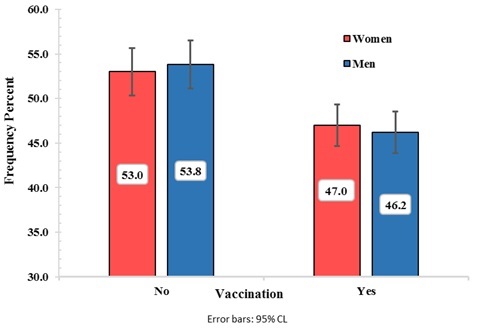
Fig. 1. The frequency distribution of vaccination among men and women in COVID-19 patients, southeastern Iran, 2022-2023
Table 2. Adjusted odds ratio of hospitalization in wards for COVID-19 in vaccinated people compared to hospitalization in the ICU based on sex and vaccination variables, in COVID-19 patients, southeastern Iran, 2022-2023
Full-Text: (32 Views)
Introduction
Over the past few years, the severe acute respiratory syndrome coronavirus-2 (SARS-CoV-2) pandemic has resulted in high morbidity and mortality worldwide, so it has become one of the most important public health challenges [1,2]. As of 6 March 2023, there were 759,408,703 confirmed cases of COVID-19, including 6,866,434 deaths, with a total of 13,229,471,213 vaccine doses administered [3], particularly for elderly people and those with underlying disease who are highly vulnerable to coronavirus disease 2019 (COVID-19) [1]. Thus, governments have implemented many strategies to prevent further infections and control the pandemic. One of the most common strategies is vaccination against SARS-CoV-2 [1,4-5].
In spite of the rapid rollout of vaccines, the emergence of new SARS-CoV-2 variants, such as Omicron, has challenged vaccine effectiveness, as these strains present greater immune escape [6]. While clinical trials and observational studies have demonstrated that vaccination lowers the risk of severe outcomes, such as hospitalization, intensive care unit (ICU) admission, and death [7–9], the degree of protection varies across vaccine types and falls over time [8]. For example, after four months, the effectiveness of the Pfizer and Moderna vaccines against severe disease declined to approximately 84% and 92%, respectively [9,10]. Likewise, a 2021 review reported that AstraZeneca, Sputnik V, and Sinopharm vaccines exhibited high effectiveness in preventing severe disease requiring hospitalization [11].
However, despite these findings, evidence remains limited and region-specific variations are insufficiently explored. For example, a large cohort study conducted in Shiraz reported reductions in hospitalizations of 71.9%, 81.5%, 67.5%, and 86.4% following complete vaccination with Sinopharm, AstraZeneca, Sputnik V, and CovIran Barkat, respectively, along with an 85% reduction in mortality [12]. Another study among health care workers in northern Iran demonstrated strong immunogenicity of the Sputnik V vaccine [13]. Nonetheless, these studies have not fully addressed the heterogeneity of COVID-19 outcomes across different provinces, where social, economic, and cultural factors may affect both vaccination coverage and disease severity. In particular, southeastern Iran, including Kerman Province, has been underrepresented in previous research.
In order to address this gap, the present case–control study aimed to ascertain the effectiveness of COVID-19 vaccines in lowering the severity of disease in Kerman Province, southeastern Iran. In this study, severity was defined as hospitalization in temporary wards, general wards, intensive care units (ICUs), and death. Through adjusting for comorbidities, our study seeks to provide a clearer understanding of the preventive effect of vaccination across this specific regional context.
Materials and Methods
The present study was undertaken on COVID-19 patients who were hospitalized at hospitals affiliated with the Bam University of Medical Sciences at late 2022 and early 2023. A case‒control method was applied to appraise the relationship between hospitalization due to COVID-19 and previous vaccination with existing vaccines (Sinopharm, AstraZeneca, and Barkat) in the country. In this analysis, the case group consisted of patients with severe illnesses who were hospitalized, while the control group included participants from 3 different sources. We included control group 1 (patients with COVID-19 who received outpatient services), control group 2 (patients with COVID-19 admitted to the general ward), and control group 3 (patients hospitalized for other reasons but not for COVID-19). For comparing patients in different groups, patients with a history of previous vaccination were asked about, whereby the chances of disease occurrence and severe disease were measured. Since the underlying disease affects disease severity and subsequent death, control and case groups were monitored for four underlying diseases, namely, hypertension, diabetes, cardiovascular disease, and lung disease. In order to eliminate the effect of age, in addition to group matching at the time of analysis, age was also controlled for.
A total population >18 years admitted to the hospital were screened through daily review of hospital admission reports and medical records. Patients with COVID-19 who were admitted with a clinical syndrome corresponding to acute COVID-19 and whose molecular or antigen test results were positive within 10 days after the patient’s onset of symptoms were included in the case and control groups. All samples were collected over 3 consecutive months, and missing information related to vaccination and underlying diseases was obtained through interviews with patients or, in cases of death, with their families. A lack of consent to participate in the study was considered an exclusion criterion.
Trained staff collected demographic, clinical, and laboratory data from participants (or proxies) through standardized interviews (for which the type of question was clear and the interviewer was not allowed to ask questions other than what was predetermined), with medical records reviewed. Details of COVID-19 vaccination, including date and place, vaccine products, and number of doses received, were determined via a systematic process involving a patient interview or proxy and source verification. The document sources included vaccination cards, hospital records, and government vaccination records.
The primary characteristics of the patients are described using descriptive statistics such as the mean ± standard deviation (SD) and frequency (percentage). A chi-square test was employed to compare the frequency distribution of hospitalized patients in different wards according to patient characteristics, with a one-way ANOVA utilized to compare the age differences among hospitalized patients in different wards. Multinomial logistic regression was applied, and adjusted odds ratios (aORs) with 95% confidence intervals (CIs) were calculated.
A multinomial logistic regression model was used to estimate the adjusted odds ratios (aORs) of hospitalization severity among vaccinated and unvaccinated patients. The model adjusted for age, sex, comorbidities (hypertension, diabetes, cardiovascular disease, and lung disease), as well as timing of vaccination (time since last dose). All patients were recruited from the same regional healthcare system, which lowered variability in access to healthcare. Socioeconomic status was not available for all participants and thus could not be statistically adjusted. In the multinomial regression model, ICU admission was defined as the reference category for comparison.
The outcome variable was defined as disease severity, classified into four levels: (1) outpatient/temporary ward, (2) general ward admission, (3) intensive care unit (ICU) admission, and (4) death. Multinomial logistic regression allowed comparison of the odds of each severity category across vaccinated and unvaccinated patients.
We evaluated sample size adequacy for the multinomial logistic regression model based on the number of predictor parameters and the events-per-parameter (EPV) rule. The model included 10 predictors: age, sex, four comorbidities (hypertension, diabetes, cardiovascular disease, and lung disease), time since last vaccination, and three dummy variables for vaccine type (Sinopharm,
AstraZeneca, Barkat, with “unvaccinated” as the reference). The outcome had three categories (outpatient, general ward, ICU as the reference), leading to two logits. Using the commonly applied EPV = 10 rule of thumb, approximately 10×p=10010 times p = 10010×p=100 events were required per logit. In our sample, the smallest category (ICU, n = 283) provided around 28 events per parameter, well above the recommended threshold. Thus, the available sample size was considered sufficient for stable model estimation.
Results
Of the 1520 patients included in this study, 573 (37.7%) were outpatients (temporary hospitalization), 664 (43.7%) were in the general ward, and 283 patients (18.6%) were admitted to the ICU. The mean age of the patients was 46.23 ± 17.13 years, with the majority of the 828 (54.5%) patients being women. PCR was positive for 1181 (77.7%) patients. Of all patients, 811 (53.4%) had not received any dose of the vaccine, 288 (18.9%) had received one dose, 48 (27%) two doses, and 10 (0.7%) three doses. The initial characteristics of the patients according to hospitalization status are reported in Table 1.
Table 1. Characteristics of the hospitalized participants according to severity of COVID-19 in COVID-19 patients, southeastern Iran, 2022-2023
| P-value | ICU Ward N (%) |
General ward N (%) |
Outpatient N (%) |
Total N (%) |
Variable | |
| <0.001a | 52.54±18.26 | 46.93±17.65 | 42.29±14.76 | 46.23±17.13 | Mean ± SD | Age |
| <0.001b | 132(46.60) | 312(47) | 248(43.30) | 692(45.5) | Men | Sex |
| 151(53.40) | 352(53) | 325(56.70) | 828(54.5) | Women | ||
| <0.001b | 186(65.70) | 290(43.70) | 233(40.70) | 709(46.60) | Yes | Vaccination |
| 97(34.30) | 374(56.30) | 340(59.30) | 811(53.4) | No | ||
| <0.001b | 97(34.30) | 374(56.30) | 340(59.30) | 811(53.40) | No vaccination | Vaccination Dose |
| 37(13.10) | 149(22.40) | 102(17.80) | 288(18.9) | One dose | ||
| 139(49.10) | 141(21.20) | 131(22.90) | 411(27.03) | Two doses | ||
| 10(3.50) | - | - | 10 (0.67) | Three doses | ||
| <0.001b | 25(8.80) | 110(16.60) | 36(6.30) | 171(11.3) | Yes | Hypertension |
| 258(91.20) | 554(83.40) | 537(93.70) | 1349(88.8) | No | ||
| <0.001b | 12(4.20) | 77(11.60) | 22(3.80) | 111(7.3) | Yes | Diabetes |
| 271(95.80) | 587(88.40) | 551(96.20) | 1409(92.7) | No | ||
| <0.001b | 8(2.80) | 10(1.50) | 2(0.30) | 20(1.33) | Yes | COPD* |
| 275(97.20) | 654(98.50) | 571(99.70) | 1482(98.67) | No | ||
| 0.54 | 0(0.00) | 1(0.20) | 0(0.00) | 1(0.10) | Yes | Liver |
| 283(1.00) | 663(99.80) | 573(100.00) | 1519(99.90) | No | ||
| <0.001c | 19(7.60) | 7(1.30) | 2(0.40) | 28(2.2) | Yes | Kidney |
| 232(92.40) | 535(98.70) | 479(99.60) | 1246(97.8) | No | ||
| <0.001b | 48(17.00) | 153(23.00) | 60(10.50) | 261(17.2) | Yes | Underlying Disease |
| 235(837.00) | 511(77.00) | 513(89.50) | 1259(82.8) | No | ||
a One-way ANOVA; b chi-square test; c Fisher’s exact test
* COPD: Chronic obstructive pulmonary disease
* COPD: Chronic obstructive pulmonary disease
Table 1 indicates that the mean age of patients (52.54±18.26 years) admitted to the ICU was significantly greater than that of patients admitted to other wards (P <0.001). The frequency distribution of hospitalization did not differ between men and women, but men were more likely to be hospitalized in general wards and ICU wards. Nearly 46.6% (709 patients) of the patients received the COVID-19 vaccine. The frequency of hospitalization of patients who received the COVID-19 vaccine in temporary hospitalization and general wards was significantly lower than that of patients who did not receive the COVID-19 vaccine (P <0.001). There were also significant relationships between diabetes, hypertension, chronic obstructive pulmonary disease (COPD), and hospitalization due to COVID-19 (P <0.05). The prevalence of diabetes and hypertension among patients admitted to the general ward owing to COVID-19 was 171 patients (11.3%) and 111 patients (7.3%), respectively, and the prevalence of COPD disease among patients admitted to the intensive care unit because of COVID-19 was 8 patients (2.8%).
Fig. 1 depicts the frequency distribution of vaccination among men and women. The percentage of vaccinated individuals was similar between men and women, and there was no significant relationship between sex and vaccination. Out of 1509 participants, 610 (40.4%) had received Sinopharm, 40 (2.7%) AstraZeneca, and 48 (3.2%) Barkat, while 811 (53.7%) were not vaccinated, and 11 (0.7%) did not report the type of vaccine.
Fig. 1 depicts the frequency distribution of vaccination among men and women. The percentage of vaccinated individuals was similar between men and women, and there was no significant relationship between sex and vaccination. Out of 1509 participants, 610 (40.4%) had received Sinopharm, 40 (2.7%) AstraZeneca, and 48 (3.2%) Barkat, while 811 (53.7%) were not vaccinated, and 11 (0.7%) did not report the type of vaccine.
Fig. 1. The frequency distribution of vaccination among men and women in COVID-19 patients, southeastern Iran, 2022-2023
Table 2 reveals that the odds ratio of hospitalization in all wards for hospitalized patients with COVID-19 was significantly lower than that for hospitalized patients in the ICU. The odds ratio of hospitalization in the temporary wards wards (OR men: 0.50, OR women: 0.45) and general wards (OR men: 0.53, OR women: 0.39) diminished significantly with the control of age and underlying disease compared to hospitalization in the ICU ward for vaccinated people of both genders. The odds ratio of hospitalization in the temporary and general wards for COVID-19 compared to hospitalization in the ICU was significantly lower for men and women who had received the Sinopharm vaccine, and women were hospitalized less often than men were. Moreover, the odds ratio of hospitalization was significantly lower for men and women who had received the Barkat vaccine. The odds ratio of admission to the temporary ward for COVID-19 in men who had received the AstraZeneca vaccine and the risk of admission to the general ward in women who had received the AstraZeneca vaccine declined, but these differences were not statistically significant.
Table 2. Adjusted odds ratio of hospitalization in wards for COVID-19 in vaccinated people compared to hospitalization in the ICU based on sex and vaccination variables, in COVID-19 patients, southeastern Iran, 2022-2023
| Women (N=828) | Men (N=692) | Variables | |||
| General ward OR (95%CI) |
Temporary ward OR (95%CI) |
General ward OR (95%CI) |
Temporary ward OR (95%CI) | ||
| 0.39(0.25-0.59)* | 0.45(0.29-0.68)* | 0.53 (0.33-0.82)* | 0.50(0.32-0.81)* | Yes | Vaccination |
| - | Reference | - | Reference | No | |
| - | Reference | - | Reference | No Vaccination | Vaccination type |
| 0.37(0.24-0.57)* | 0.37(0.24-0.57)* | 0.46(0.29-0.74)* | 0.46(0.28-0.76)* | Sinopharm | |
| 0.59(0.18-4.51) | 1.15(0.22-5.89) | 1.67 (0.45-6.15) | 0.79(0.17-3.59) | Astra zeneca | |
| 0.83(0.25-2.68) | 0.61(0.17-2.12) | 0.59(0.17-2.03) | 0.75(0.22-2.57) | Barkat | |
OR: odds ratio; CI: confidence interval; *: P<0.05
Discussion
We ascertained the association between COVID-19 vaccine immunization and the relative risk of severe COVID-19. Across the large population, vaccine immunization was linked to a lowered relative risk of hospitalization. In a case‒control study by Ridgway JP et al., vaccination with a booster dose of the COVID-19 mRNA vaccine was shown to be associated with a diminished risk of developing severe COVID-19 compared with no vaccination, which is in accordance with the findings of the present study [14-17]. Observational studies comparing hospitalization rates among boosted individual’s versus unvaccinated individuals have shown 55% to 99% lower odds of COVID-19 among those who are diagnosed with COVID-19 [18-20].
There have been no documented reports of hospitalization among fully vaccinated patients with comorbidities. Nevertheless, among fully vaccinated patients with comorbidities, only 10 out of 52 were admitted to the ICU. Further, the analysis revealed significant protection associated with three doses of any of the vaccines used to prevent hospital admission. This result is in line with the results of Selvavinayagam et al. [14]. Nevertheless, Mirahmadizadeh et al. reported that, compared with the other vaccines employed, the BBIBP CoV vaccine was associated with a greater mortality risk during follow-up [12]. The definitive reason for this difference is still obscure [12]. However, compared with vaccine efficacy studies [15-16], longitudinal and retrospective studies appear to be susceptible to misclassification of vaccination status and outcomes as a bias [20].
Our results indicated that vaccinated men were less likely to be hospitalized in all wards with COVID-19. Even though, based on past studies [20-21], it seems that the vulnerability and mortality caused by Covid-19 are greater in men than in women, further data are needed to reach a definite conclusion in this regard. The difference observed thus far between the severity and mortality of the disease between the two genders could be owing to sex differences, characteristics of the immune system, or higher risk behaviors in men, such as smoking. Previous studies have measured the immune system response in people in the first stage of COVID-19 disease through examining blood and nasal mucus samples. They revealed obvious differences in immune system reactions between the two sexes. The T cells, which recognize and attack virus-infected cells, are more active even in elderly women. According to these findings, these studies suggest that a vaccine against the coronavirus should be developed considering sex differences and, for instance, that it should be able to strengthen T cells, especially in men [21].
The relative risk of hospitalization in all wards was lower for men and women who received Sinopharm or AstraZeneca and for women who received the Barkat vaccine. Nevertheless, there was a significant difference in the percentage of patients who received the Sinopharm vaccine. One of the main advantages of our study is that we explored the effects of vaccination type with age controlled for comorbid diseases on the severity of COVID-19 based on sex using multinomial logit regression compared to that in the non–COVID-19 ward. This is because multinomial regression provides a highly interpretable coefficient which quantifies the adjusted relationship between our features and the vaccine effect. These data complement vaccine trials and emerging post-marketing data suggesting that receiving vaccination is linked to a diminished risk of severe COVID-19 [19]. In line with the results of our study based on studies performed in China, the Sinopharm vaccine prevents approximately 80% of the disease; that is, when talking about vaccines, we mean those who have been fully vaccinated and two weeks have passed since then. After receiving the first and second rounds of vaccination as well as two weeks after the second round, when the appropriate antibody level is formed in the body, the patients who received the Sinopharm vaccine prevented 80% of their reinfection, and 50% of the sick patients had been saved from death [22-23].
Our findings indicated a significant decline in the hospitalization rate of COVID-19 patients in different wards compared to that of unvaccinated people; thus, the lowest hospitalization rate of vaccinated patients was in the ICU. In accordance with our findings, other studies have reported a significant reduction in hospitalization mortality among vaccinated people compared to nonvaccinated people [24-25]. Based on the report of the Centers for Disease Prevention and Control, the cumulative rate of hospitalization because of COVID-19 in vaccinated people was 12 times lower than that in nonvaccinated people [24]. These findings agree well with the model predicted by Moghadas et al. using United States data, which predicted 69.3% protection from hospitalization following vaccination [26].
Further, our findings revealed a significant association between the number of doses of the COVID-19 vaccine administered and the hospitalization rate; as the number of vaccine doses increased, the hospitalization rate in all COVID-19 wards diminished significantly, except for that in the second dose, in which we observed an increase in ICU admissions compared to that in the other COVID-19 wards. Besides the different effectiveness of the vaccines and the intervals between vaccinations, these factors can affect the hospitalization rate. Moreover, the characteristics of patients affect the hospitalization rate in wards in terms of age, sex, underlying disease, history of infection with COVID-19, adherence to protocols, and prevalence of more contagious strains of COVID-19 [27-28]. From the cases of the incidence of COVID-19 among vaccinated people compared to nonvaccinated people, we can mention the unstable trend in combination with the heterogeneity of vaccination speed and gradual vaccination strategies in Iran, and at the same time the emergence and spread of new variants that may reduce the effectiveness of existing vaccines [28, 29].
Multiple factors influence the estimated effectiveness of COVID-19 vaccines in nonrandomized studies. These include vaccination misclassification, preexisting immunity, differences in exposure, confounding by disease risk factors, hospital admission decisions, treatment differences, and death attribution [29]. In order to improve the estimation of vaccine efficacy, we collected reliable information, undertook blinded assessments of outcomes, performed multivariable analyses, and utilized standard multivariable adjustments for confounders. It is also recommended to conduct studies with test-negative case–control and case–crossover designs to correct the effectiveness of the vaccine in the future. The most important limitation of our study was the possibility of bias owing to differential health-seeking behavior, as people who had already received vaccines are more health conscious and therefore more likely to seek care at the earliest.
This study has been one of the first of its kind at the provincial level in Iran. Undoubtedly, some management deficiencies and global sanctions have caused problems with Iran’s vaccination strategy and correct implementation of it in the early stages of the epidemic. This issue has aggravated the problems related to ascertaining the effectiveness of vaccines. Thus, notably despite all limitations of this study, we tried to compare the effect of vaccination on the severity of infection with that of COVID-19 and hospitalization. Further, there are still many questions posed by the COVID-19 vaccine effort that need to be addressed.
Studies have shown that the type of vaccination, frequency of vaccination, and individual health status can significantly affect vaccine immune responses. April 2022 hospitalizations in US adults indicated that vaccinated hospitalized individuals were more likely to be older and have more underlying medical conditions compared to unvaccinated hospitalized individuals [30]. In the present study, those with underlying diseases were older, so for example, people with high blood pressure were 14 years older than people without high blood pressure, and people hospitalized in ICU were older than other patients hospitalized in other departments. Elsewhere, Havers et al study found that the rate of hospitalization related to covid-19 was 10.5 times higher in unvaccinated people and 2.5 times in vaccinated people without a booster dose compared to vaccinated people with a booster dose [30]. In this study, most of the vaccinated people had received only one or two doses of the vaccine, with only 10 patients reporting to have received three doses of the vaccine. This group of 10
elderly people were between 59 and 85 years old, 6 of them being women and the rest 4 being men. Nevertheless, studies have shown that spacing vaccines over time can result in a stronger and more durable immune response. Al Shudift et al found that differences in long-term immunoglobulin response depended on the type of vaccine administered as well as the occurrence of covid-19 infection [31]. Another reason for the ineffectiveness of vaccination is the interval between vaccinations. Along the COVID-19 period, the intervals between receiving the first and second doses are longer and may promote reduced effectiveness of the vaccine. The vaccines applied in this study were Sino pharm, AstraZeneca and Barkat. It should be also added that some people received the vaccines employed in the second and booster doses, which may have diminished the effectiveness of the vaccine.
Patients who required hospitalization or intensive care had a higher prevalence of prior vaccination compared with other groups, most likely because they were older and had more underlying medical conditions—factors that increase both the likelihood of receiving vaccination and the risk of severe COVID-19. This finding can strengthen the hypothesis that this group of patients are those in whom vaccination has not been successful. The proof of this hypothesis can only be elucidated by determining the status of IgG relative to the receptor binding domain of the SARS-CoV-2 spike protein and as a result determining the quantity (titer) and quality (avidity) of antibodies, which was not explored in this study.
Conclusion
In this study, in southeastern Iran, we examined the effect of vaccination on the severity of COVID-19 disease in patients treated at the hospitals of University of Medical Sciences. The relative risk of ICU admission and admission to general and outpatient wards was greater for unvaccinated individuals of both genders than for vaccinated counterparts infected with COVID-19 after adjusting for the effects of age, comorbidities, and vacation. Assessment of surrogate indicators such as hospitalization, ICU admission, and outpatient admissions revealed that vaccination with COVID-19 can protect individuals from severe disease.
Acknowledgments
The authors extend their sincere appreciation to the staff of the participating hospitals—particularly Mr. Abdolreza Bahrami—and to all the patients who generously contributed to this study. We also gratefully acknowledge the support of the Bam University of Medical Sciences for facilitating data collection and coordinating various aspects of the study.
Conflict of interest
None declared.
Funding
This work was supported by the Bam University of Medical Sciences under Grant number 1401/028.
Ethical Considerations
The Helsinki Declaration was followed for involving human subjects in the study. Informed consent was obtained from all participants if they directly involved in the study. The data and supportive information are available within the article. Strobe guidelines were followed.
Code of Ethics
This study received the ethics code from Bam University of Medical Sciences (IR.MUBAM.REC.1401.014).
Authors' Contributions
Mohsen Mohammadi: Data collection and analysis were performed; Abdolali Golpayegani: Data collection and analysis were performed; Fatemeh Doost Mohammadi: Data collection and analysis were performed; Fatemeh Majidpour: Data collection and analysis were performed; Elahe Hesari: Data collection and analysis were performed; Maryam Dargahpour: Data collection and analysis were performed; Parisa Jalali: Supervised the project and provided critical revisions. All authors read and approved the final manuscript and contributed to the study conception and design.
References
1. Yuki K, Fujiogi M, Koutsogiannaki S. COVID-19 pathophysiology: A review. Clin Immunol. 2020;215:108427. [DOI] [PMID] [PMCID]
2. Ciotti M, Ciccozzi M, Terrinoni A, Jiang WC, Wang CB, Bernardini S. The COVID-19 pandemic. Crit Rev Clin Lab Sci. 2020;57(6):365-88. [DOI] [PMID]
3. World Health Organization. WHO COVID-19 dashboard. Geneva, Switzerland: World Health Organization; 2023.
4. Wang J, Jing R, Lai X, Zhang H, Lyu Y, Knoll MD, et al. Acceptance of COVID-19 Vaccination during the COVID-19 Pandemic in China. Vaccines (Basel). 2020;8(3):482. [DOI] [PMID] [PMCID]
5. Sadarangani M, Abu Raya B, Conway JM, Iyaniwura SA, Falcao RC, Colijn C, et al. Importance of COVID-19 vaccine efficacy in older age groups. Vaccine. 2021;39(15):2020-3. [DOI] [PMID] [PMCID]
6. Ellington S, Jatlaoui TC. COVID-19 vaccination is effective at preventing severe illness and complications during pregnancy. Lancet. 2023;401(10375):412-3. [DOI] [PMID] [PMCID]
7. Thompson MG, Stenehjem E, Grannis S, Ball SW, Naleway AL, Ong TC, et al. Effectiveness of Covid-19 vaccines in ambulatory and inpatient care settings. N Engl J Med. 2021;385(15):1355-71. [DOI] [PMID] [PMCID]
8. Nordström P, Ballin M, Nordström A. Risk of infection, hospitalisation, and death up to 9 months after a second dose of COVID-19 vaccine: a retrospective, total population cohort study in Sweden. Lancet. 2022;399(10327):814-23. [DOI] [PMID] [PMCID]
9. Thomas SJ, Moreira ED Jr, Kitchin N, Absalon J, Gurtman A, Lockhart S, et al. Safety and efficacy of the BNT162b2 mRNA Covid-19 vaccine through 6 months. N Engl J Med. 2021;385(19):1761-73. [DOI] [PMID] [PMCID]
10. El Sahly HM, Baden LR, Essink B, Doblecki-Lewis S, Martin JM, Anderson EJ, et al. Efficacy of the mRNA-1273 SARS-CoV-2 vaccine at completion of blinded phase. N Engl J Med. 2021;385(19):1774-85. [DOI] [PMID] [PMCID]
11. Ghiasi N, Valizadeh R, Arabsorkhi M, Hoseyni TS, Esfandiari K, Sadighpour T, et al. Efficacy and side effects of Sputnik V, Sinopharm and AstraZeneca vaccines to stop COVID-19; a review and discussion. Immunopathol Persa. 2021;7(2):e31. [DOI]
12. Mirahmadizadeh A, Heiran A, Bagheri Lankarani K, Serati M, Habibi M, Eilami O, et al. Effectiveness of COVID-19 Vaccines in preventing Infectiousness, Hospitalization and Mortality: A Historical Cohort Study Using Iranian Registration Data During Vaccination program. MedRxiv. 2022. [DOI]
13. Babamahmoodi F, Saeedi M, Alizadeh-Navaei R, Hedayatizadeh-Omran A, Mousavi SA, Ovaise G, et al. Side effects and Immunogenicity following administration of the Sputnik V COVID-19 vaccine in health care workers in Iran. Sci Rep. 2021;11(1):21464. [DOI] [PMID] [PMCID]
14. Selvavinayagam TS, Parthipan K, Subramaniam S, Somasundaram A, Sampath P, Kumar V. Role of Covid vaccine in determining ICU admission and death due to Covid-19 in Tamil Nadu. MedRxiv. 2022. [DOI]
15. Al Kaabi N, Zhang Y, Xia S, Yang Y, Al Qahtani MM, Abdulrazzaq N, et al. Effect of 2 Inactivated SARS-CoV-2 Vaccines on Symptomatic COVID-19 Infection in Adults: A Randomized Clinical Trial. JAMA. 2021;326(1):35-45. [DOI] [PMID] [PMCID]
16. Logunov DY, Dolzhikova IV, Shcheblyakov DV, Tukhvatulin AI, Zubkova OV, Dzharullaeva AS, et al. Safety and efficacy of an rAd26 and rAd5 vector-based heterologous prime-boost COVID-19 vaccine: an interim analysis of a randomised controlled phase 3 trial in Russia. Lancet. 2021;397(10275):671-81. [DOI] [PMID] [PMCID]
17. Ridgway JP, Tideman S, French T, Wright B, Parsons G, Diaz G, et al. Odds of Hospitalization for COVID-19 after 3 vs 2 Doses of mRNA COVID-19 Vaccine by Time Since Booster Dose. JAMA. 2022;328(15):1559-61. [DOI] [PMID] [PMCID]
18. Accorsi EK, Britton A, Shang N, Fleming-Dutra KE, Link-Gelles R, Smith ZR, et al. Effectiveness of homologous and heterologous Covid-19 boosters against Omicron. N Engl J Med. 2022;386(25):2433-5. [DOI] [PMID] [PMCID]
19. Andrews N, Stowe J, Kirsebom F, Toffa S, Sachdeva R, Gower C, et al. Effectiveness of COVID-19 booster vaccines against COVID-19–related symptoms, hospitalization and death in England. Nat Med. 2022;28(4):831-7. [DOI] [PMID] [PMCID]
20. Niessen FA, Knol MJ, Hahné SJM; VECTOR study group; Bonten MJM, Bruijning-Verhagen PCJL. Vaccine effectiveness against COVID-19 related hospital admission in the Netherlands: a test-negative case-control study. Vaccine. 2022;40(34):5044-9. [DOI] [PMID] [PMCID]
21. Wenham C, Smith J, Morgan R; Gender and COVID-19 Working Group. COVID-19: the gendered impacts of the outbreak. Lancet. 2020;395(10227):846-8. [DOI] [PMID] [PMCID]
22. Zhang Y, Belayachi J, Yang Y, Fu Q, Rodewald L, Li H, et al. Real-world study of the effectiveness of BBIBP-CorV (Sinopharm) COVID-19 vaccine in the Kingdom of Morocco. BMC Public Health. 2022;22(1):1584. [DOI] [PMID] [PMCID]
23. Wang C, Chen LY, Lu QB, Cui F. Vaccination with the Inactivated Vaccine (Sinopharm BBIBP-CorV) Ensures Protection against SARS-CoV-2 Related Disease. Vaccines (Basel). 2022;10(6):920. [DOI] [PMID] [PMCID]
24. Tenforde MW, Self WH, Adams K, Gaglani M, Ginde AA, McNeal T, et al. Association between mRNA vaccination and COVID-19 hospitalization and disease severity. JAMA. 2021;326(20):2043-54. [DOI] [PMID] [PMCID]
25. Moghadas SM, Vilches TN, Zhang K, Wells CR, Shoukat A, Singer BH, et al. The impact of vaccination on Coronavirus Disease 2019 (COVID-19) Outbreaks in the United States. Clin Infect Dis. 2021;73(12):2257-64. [DOI] [PMID] [PMCID]
26. Nyberg T, Ferguson NM, Nash SG, Webster HH, Flaxman S, Andrews N, et al. Comparative analysis of the risks of hospitalisation and death associated with SARS-CoV-2 omicron (B. 1.1. 529) and delta (B. 1.617. 2) variants in England: a cohort study. Lancet. 2022;399(10332):1303-12. [DOI] [PMID] [PMCID]
27. Stoliaroff Pepin A, Peine C, Herath T, Lachmann J, Hellenbrand W, Perriat D, et al. Vaccine effectiveness against severe COVID 19 during the Omicron wave in Germany: results from the COViK study. Infection. 2023;51(4):1093-102. [DOI] [PMID] [PMCID]
28. Tregoning JS, Flight KE, Higham SL, Wang Z, Pierce BF. Progress of the COVID-19 vaccine effort: viruses, vaccines and variants versus efficacy, effectiveness and escape. Nat Rev Immunol. 2021;21(10):626-36. [DOI] [PMID] [PMCID]
29. Ioannidis JPA. Factors influencing estimated effectiveness of COVID-19 vaccines in non-randomised studies. BMJ Evid Based Med. 2022;27(6):324-9. [DOI] [PMID] [PMCID]
Send email to the article author
| Rights and permissions | |
 |
This work is licensed under a Creative Commons Attribution 4.0 International License. |