Journal of Occupational
Health and Epidemiology

Rafsanjan university Of medical sciences
Volume 14, Issue 4 (Autumn 2025)
J Occup Health Epidemiol 2025, 14(4): 295-302 |
Back to browse issues page




Download citation:
BibTeX | RIS | EndNote | Medlars | ProCite | Reference Manager | RefWorks
Send citation to:


BibTeX | RIS | EndNote | Medlars | ProCite | Reference Manager | RefWorks
Send citation to:
Habibi E, Saber E, Barakat S. Enhancing Resilience Engineering through Reliability Optimization: An Approach to Systems Protection and Upgrade (Narrative Review). , J Occup Health Epidemiol. 2025; 14 (4) :295-302
URL: http://johe.rums.ac.ir/article-1-952-en.html
URL: http://johe.rums.ac.ir/article-1-952-en.html
Related article in
Google Scholar
Google Scholar
Similar articles


1- Professor, Dept. of Occupational Health and Safety Engineering, School of Health, Isfahan University of Medical Sciences, Isfahan, Iran.
2- Ph.D. Student in Occupational Health and Safety Engineering, Student Research Committee AND Department of Occupational Health and Safety Engineering, School of Health, Isfahan University of Medical Sciences, Isfahan, Iran. ,elhamsaber770@gmail.com
3- Ph.D. Student in Occupational Health and Safety Engineering, Student Research Committee AND Department of Occupational Health and Safety Engineering, School of Health, Isfahan University of Medical Sciences, Isfahan, Iran.
2- Ph.D. Student in Occupational Health and Safety Engineering, Student Research Committee AND Department of Occupational Health and Safety Engineering, School of Health, Isfahan University of Medical Sciences, Isfahan, Iran. ,
3- Ph.D. Student in Occupational Health and Safety Engineering, Student Research Committee AND Department of Occupational Health and Safety Engineering, School of Health, Isfahan University of Medical Sciences, Isfahan, Iran.
Article history

Received: 2024/10/31
Accepted: 2025/05/22
ePublished: 2025/12/13
Accepted: 2025/05/22
ePublished: 2025/12/13
Subject:
Occupational Health
Full-Text [PDF 566 kb]
(499 Downloads)
| Abstract (HTML) (1315 Views)
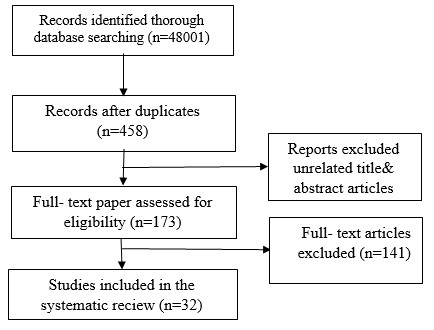
Fig. 1. Flowchart of the literature search
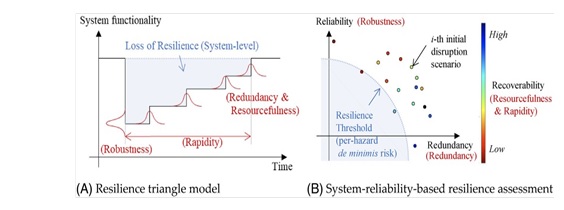
Fig.2. Illustrative comparison of the resilience triangle (left) featuring four resilience attributes (in red) alongside the system-reliability-based resilience diagram (right), which includes three resilience criteria (in black) [25]
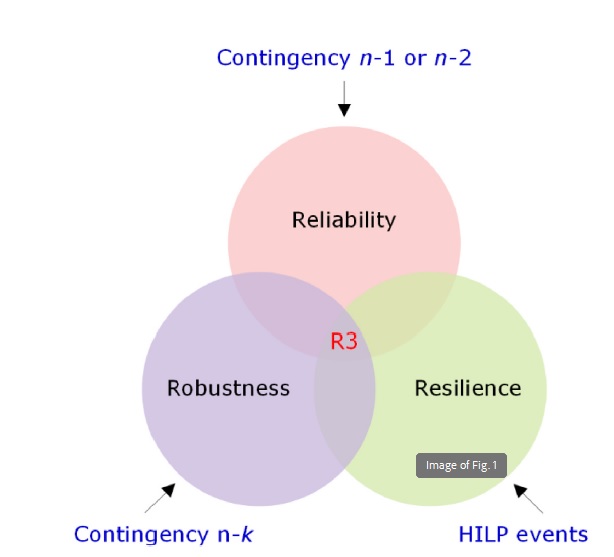
Fig.3. Schematic representation of the R3 concept [27]
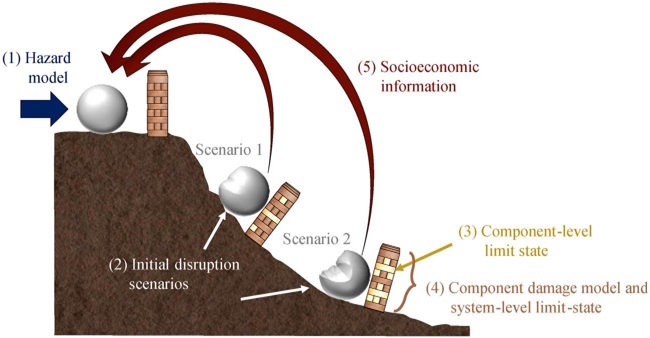
Fig.4. Five critical features for the system-reliability-based resilience assessment [25]
Fig. 4 illustrates a visual depiction of resilience metrics, drawing inspiration from abstract representations of metastability in physics. In the illustration, the sphere represents the system's configuration under discussion. The horizontal arrow positioned to the left of the risk concept denotes potential natural or human-induced threats capable of instigating catastrophic incidents. If the initial segment labeled "reliability" proves inadequate, the sphere begins to descend, indicating an early breakdown at the component level. The subsequent segment, labeled "Extra," intervenes to halt the sphere's descent and mitigate further harm [23]. The primary objective of this study is to showcase the system's capacity to avert premature component failures that may trigger a cascade of breakdowns or significant deterioration in overall system performance [30]. Additionally, the arrows guiding the sphere back to its original position signify the capabilities and resources required to take prompt, effective measures in response. The metric of "recovery" encompasses considerations of both speed and efficacy in addressing issues, albeit within the overarching framework of system dependability [22]. In recent years, resilience engineering has attracted the attention of economists, leading to extensive research on the topic. This interest arises from resilience engineering's focus on the system's ability to cope with and respond to external hazards while providing a range of possible coping strategies [31]. This principle aligns with studies on the livelihoods and adaptive strategies of smallholder farmers facing external pressures such as climate change. Although the two subjects differ in scale—where the former focuses on the regional level and the latter on the individual—the underlying concepts remain connected [32].
Discussion
Effective factors in improving resilience and reliability of organizations: To enhance and cultivate reliability within organizations, it is crucial to undertake a scientific assessment of regional resilience in conjunction with reliability [33]. An examination of the factors influencing resilience reveals that the degree of intra-organizational creativity, the presence of green spaces per capita, efficient industrial frameworks, and the proportion of financial investments all contribute positively to regional resilience. Emphasis should be placed on the advantages and functionalities of industrial frameworks, and on the extent of innovation in fostering greater reliability and resilience.
Embracing innovation-centered strategies is essential for systems, along with a comprehensive understanding of the potential for innovation-driven growth, thereby empowering regional innovation to serve as a propelling force [11]. Pantelli et al. conducted a quantitative evaluation on resilience engineering, while Francis et al. introduced the notion of resilience capacity, providing a comprehensive assessment of a system's resilience when these two factors are integrated [33]. Enhancing the system's capacity to absorb disturbances before a disruption is crucial for conducting such evaluations. Routine evaluation of asset health is also essential for improving the system's dependability and absorptive capacity, thereby enhancing its operational adaptability [34]. Determining the safety and stability of the system is vital, as identifying any structural deficiencies can lead to necessary repairs and preventive maintenance, thus reducing the likelihood of system and component failures. These measures encompass forming teams for system recovery and maintenance, as well as planning teams, among others. Such preparations may involve utilizing tools like demand response and accessible energy resources [4].
Ahead challenges in resilience engineering and high-reliability systems: One of the most crucial factors in addressing challenges and deficiencies within systems is enhancing reliability and applying the principles of resilience engineering, as previously deliberated. Resilience, as described, pertains to the capacity of a system to adjust its functionality before, during, or after any occurrence or disruption to sustain its typical performance under various circumstances [35]. Within resilience engineering, a pivotal concept is resilience itself; a system capable of upholding its standard operation under all conditions is not necessarily deemed resilient, as this could be achieved through inefficient methods, such as stockpiling excessive resources (for example, maintaining numerous vacant sectors in a hospital during an emergency) [36]. Therefore, one potential challenge in resilience engineering is determining whether a set of reserves should be removed for efficiency or preserved to enhance resilience. The ability of a system to address this issue effectively is expected to hinge on the implementation and upkeep of the four key pillars of resilience [37].
Given the advantages of embracing resilience engineering (i.e., the capacity to handle disruptions), organizations may choose to incorporate some of its principles. Presently, a resilient system is expected to possess four essential capabilities: (a) the capability to react to incidents, (b) the capability to monitor organizational changes, (c) the capability to anticipate potential risks and opportunities, and (d) the capability to derive lessons from failures and achievements [38] For a system to address disturbances effectively, it must execute various risk analysis techniques and offer responses and potential scenarios, enabling it to react appropriately when an event or disturbance occurs [35]. To ensure the effectiveness of risk analysis, the identified risks must be regularly reassessed to ensure preparedness to address them [39].
Moreover, to assess the capability of a system with high reliability to forecast potential risks and opportunities, it is imperative to scrutinize the insights it generates about the future [40]. Consequently, the system's capacity to anticipate future threats or opportunities is constrained, as historical data may not consistently predict future outcomes. If a system perceives future occurrences as phenomena arising from its intricate dynamics and interactions with its surroundings, it could excel at predicting risks and opportunities. Lastly, a robust system may be inclined to derive insights from both failures and successes, as these occurrences are likely to recur [41].
High-reliability concept and features: Despite the aforementioned issues and obstacles, some intricate organizations have conducted thorough analyses and consistently reduced failures while maintaining high performance [42]. These organizations demonstrate a strong level of reliability. Numerous researchers have examined the attributes of these organizations to identify the key factors contributing to their success. The outcomes and discoveries of these studies exhibit both similarities and distinctions.
Primarily, organizations characterized by high reliability exhibit a proactive attitude toward risk assessment and management. Instead of attempting the unfeasible task of preventing failures and defects in their systems, these successful organizations opt to integrate costs within their operations [43]. In these organizations, management and personnel are inclined to investigate the root causes of failures and defects, interpreting them as indicative of significant issues within the organizational framework. Consequently, they adopt various strategies, including encouraging members to report hazards and vulnerabilities, learn from errors, and avoid unwarranted confidence [44]. An essential aspect of highly reliable organizations lies in their acknowledgment and accommodation of the complexities inherent in daily operational processes, which are inherently irremovable. As a result, these organizations are characterized not by overconfidence but by a thorough awareness of potential disruptions and hazards. Moreover, both management and personnel recognize that the intricate nature of the system precludes any individual from fully mastering all responsibilities necessary to sustain organizational functionality [42]. Another pivotal trait of high-reliability organizations is the esteem they place on experts rather than an authoritarian approach. Here, expertise does not solely equate to extensive experience, as proficiency is not always synonymous with tenure. Instead, an expert is defined as someone possessing the requisite awareness and knowledge to effectively address prevailing circumstances, irrespective of their hierarchical authority [45].
Despite the positive aspects of possessing reliability and resilience within organizations, limitations exist that may hinder their efficacy [46]. Numerous directives are ambiguous, rendering them unattainable. Furthermore, as organizations strive to enhance performance and boost efficiency in light of unforeseenevents and breakdowns, they must navigate such encounters [47]. Consequently, the occurrence of these events makes failure tangible. In contrast, organizations with high reliability harbor valuable insights and knowledge that can apply to all organizations, albeit without
imperfections [48]. A prevalent critique of high-reliability organizations is that they primarily serve large, interconnected systems, such as marine transportation or air traffic management, and fail to offer guidance or best practices for smaller organizations [42].
Conclusion
According to the reviewed articles, the rapid advancement of contemporary technologies across sectors, along with the simultaneous occurrence of natural and man-made disasters and calamities, has transformed organizations into complex and demanding systems. As a result, accidents have become an undeniable aspect of organizational and industrial operations. These events may be caused by the lack of system reliability, followed by system inflexibility, or by inherent system defects. The existing complexities and unpredictable behaviors create constraints on the system and its components, requiring adaptive measures that may sometimes lead to defects.
Ultimately, systems should strive to have a high level of reliability in the first place and be able to adapt to these challenges effectively following accidents and incidents. Increasing resilience by drawing on lessons and insights from highly reliable organizations is crucial to successfully managing these constraints. While achieving any level of resilience and reliability inevitably comes with limitations and hurdles, it is an important point for organizations striving to improve quality, raise standards, and optimize resilience engineering through increased reliability.
Conflict of interest
None declared.
Funding
None
Ethical Considerations
As this study is a literature review, no new research was conducted on human or animal subjects. All cited research has been duly acknowledged, and the authors declare that they have no conflict of interest.
Authors' Contributions
Ehsanollah Habibi: Study conceptualization, methodology, data curation; Elham Saber: Study conceptualization, data curation, writing original draft preparation; Samira Barakat: Methodology, reviewing, and editing; all authors have read and agreed to the published version of the manuscript.
Full-Text: (20 Views)
Introduction
Reliability is essentially understood as the capacity of a system to meet the performance criteria specified for it, including scenarios such as intentional system failure to ensure its safety [1]. In previous research, reliability is described as a holistic concept that interacts with availability, safety, integrity, and maintainability [2] . Furthermore, reliability is described as the ability of a system to meet specified criteria in terms of quantity and quality [3]. In contrast, resilience encompasses a broader concept and definition compared to reliability [4]. In 2009, the National Infrastructure Advisory Council defined infrastructure resilience as "the capacity to diminish the intensity and/or duration of perturbing occurrences" [5]. The efficacy of a resilient infrastructure or entity hinges on its ability to foresee, assimilate, adjust to, and/or promptly recover from a potentially disruptive incident [6]. Berger, in 1973, explicated resilience concerning ecological systems as "the persistence of systems and their ability to absorb change and disruption while still maintaining the same relationships among populations or state variables" [7].
Scholars within the safety domain view flexibility as intricately connected to safety management procedures, aiming to enhance society's capacity to respond to and withstand various accidents and calamities [8]. Resilience theory, introduced by Holling, has been applied to the analysis of ecosystems to assess their capacity to return to equilibrium after disruptions [9].
Following Berger, safety experts have introduced the notion of resilience, derived from natural ecosystems, into social and environmental systems to investigate the capacity of systems to mitigate the negative impacts of various events and to gradually recover from both natural and man-made catastrophes [10]. Consequently, Berger revised the earlier definition of resilience, contending that a system can withstand multiple potential disturbances before altering its configuration and underscoring that the system may exhibit several stable states throughout its lifecycle. As a result, there has been a surge in research on the resilience of social systems. Scholars from diverse disciplines, including structured organizational systems, public and private safety systems, critical infrastructure systems, and organizational and community resilience, have embraced this alternative perspective to delineate the concept of "resilience," focusing on the capacity of systems and societies to withstand and rebound from emergency scenarios [11].
Enhancing the dependability and resilience of systems can serve as a crucial psychological asset, helping individuals adjust to challenging, high-risk environments [12]. Furthermore, the combination of these two factors can significantly impact individuals' psychological well-being, behavior, and effectiveness within organizations, helping them manage stress levels and address the challenges they encounter daily [9]. Consequently, resilience engineering encompasses individuals' mindsets, awareness, and approaches to mitigating harm resulting from calamitous incidents [13, 14]. Initially, based on the outcome description, resilience is a phenomenon in which individuals effectively adjust to or flourish in the presence of stress induced by work-related exposure, recovering from it and adapting flexibly to their surroundings while exhibiting minimal unfavorable behaviors [15]. Ultimately, in accordance with the process definition, resilience denotes the ability to adapt and rebound from distressing events encountered when individuals face adversity, trauma, harm, danger, or similar circumstances [16]. From a different perspective, resilience shares two key defining components. First, individuals find themselves in an environment rife with obstacles. Second, when confronted with challenges, individuals can either adjust to the circumstances or adapt by leveraging acquired competencies [17]. Numerous scholars have explored the influence of resilience on various variables. Through longitudinal
analysis, Wu et al. determined that resilience exerts preventive and protective influences on depression among intellectually disabled children [18]. Zhang et al. investigated the effects of resilience on the well-being of breast cancer patients and the mediating role of social support [19]. Hao et al. examined the intervening role of resilience in the relationship between neuroticism and overall well-being among the elderly, finding that psychological resilience mitigated the adverse effects of unfavorable psychological states. As a favorable psychological asset, resilience can protect individuals from detrimental moods or emotions [20]. Considering the studies conducted in the field of resilience engineering and increasing reliability in systems and the role of each as a complement in increasing availability and optimizing activities, and the lack of studies in this field to respond to the issues raised, this study was designed and conducted as a review.
Materials and Methods
This review was conducted in accordance with the guidelines for conducting a non-systematic narrative review. Databases such as Web of Science ISI, PubMed, Scopus, Wiley, EBSCO, and Google Scholar were used to find relevant articles. Various combinations of the specified keywords, including “system reliability,” “resilience,” and “resilience-based engineering,” were used. The study's inclusion criteria included selecting research that used one or more keywords from the article titles and was published in English-language journals. The search was limited to articles published between 2014 (January) and 2024 (September). The reason for choosing this time period was that no studies on this topic were found in the mentioned years. Therefore, by searching extensively across various journals and databases, the initial search yielded 48,001 articles. After initial screening of abstracts, 200 articles were selected for comprehensive full-text analysis. The authors focused on the most recent publications related to system reliability and resilience-based engineering (published after 2014) during the evidence synthesis. However, any publications that appeared to have made a significant contribution to the field were also included in the analysis. Finally, 32 studies that jointly addressed both reliability and resilience engineering were summarized. The articles were qualitatively reviewed, annotated, and summarized. The identification and selection procedures of the articles are shown in the PRISMA diagram (Fig. 1).
Fig. 1. Flowchart of the literature search
Results
Resilience assessment and metrics: Various studies indicate that the concept of "resilience capacities" encompasses the following:
Absorptive capacity: This refers to the system's ability to withstand disturbances and mitigate their consequences with minimal effort. Consequently, the robustness of system infrastructure design serves as the primary defense mechanism against such events. Additionally, incorporating resistance in the system's infrastructure design can help prevent the loss of flexibility during disruptions.
Adaptive capacity: This capacity comes into play once absorptive capacity has been exhausted. At this stage, a disturbance has occurred, prompting the system to adjust to prevent further damage.
Recovery capacity: During this phase, the system leverages its capacities to either revert to its normal operational state or adapt to a newly defined state [21].
Researchers have introduced four novel concepts of resilience in relation to system reliability when
discussing resilience capacities. They argue that resilience to various events can be defined by three key criteria: reliability, redundancy, and recovery [22]. An illustration of this is the assessment of a structure's resilience state by examining potential sequences of progressive failure within the system [23]. Through the analysis of each initial disturbance scenario, researchers calculate and depict reliability (β), redundancy (π), and recyclability indices on a unified graph, as demonstrated in Fig. 2. These indices not only indicate the likelihood of different failure scenarios but also pinpoint critical failure instances by establishing a flexible performance threshold that denotes the minimum acceptable risk level for each hazard. In this context, risk signifies the minimal annual probability of system failure below which societal regulations are typically not enforced. This is represented by the β-coordinate and its corresponding impact on resilience (π-coordinate), while delineating the degree of flexibility at the system level through the use of two specific indicators [24].
Fig.2. Illustrative comparison of the resilience triangle (left) featuring four resilience attributes (in red) alongside the system-reliability-based resilience diagram (right), which includes three resilience criteria (in black) [25]
Georges Zisis, in the IEEE Industry Applications magazine, elaborates on the distinctions between reliability, robustness, and flexibility within a system. He defines reliability as the likelihood that a system will operate satisfactorily over time and under specific conditions [26]. Conversely, resilience encompasses a system's capacity to prevent malfunctions when certain elements fail or to continue operating amid unforeseen disruptions, while assessing assets and network performance during cascading failures [22]. Lastly, resilience refers to a system's capacity to endure, adapt, and recover from a significant disturbance while remaining within acceptable degradation limits. This framework typically examines calamitous occurrences, such as extreme natural disasters. These shared characteristics are collectively referred to as the "R3 concept," as illustrated in Fig. 3 [23].
Fig.3. Schematic representation of the R3 concept [27]
In various research studies, resiliency metrics such as reliability, redundancy, and recoverability of a system have been examined further to analyze the origins of multiple progressive failure scenarios. Consequently, in an "early failure scenario," initial failures caused by external forces indicate a deficiency in the "reliability" of the system, which is subsequently followed by additional failures due to external forces and initial loads [22].
To illustrate, the reliability index within a structural system encompasses the capacity of structural components, such as columns, connections, or cables, to prevent initial failures, whereas the requisite redundancy index pertains to the system's capability to avert complete system failures. Conversely, the third aspect of resilience, recovery, concerns the time and costs associated with repairing structural elements to restore the structure's initial (or desired) level of safety or performance [28]. As a result, these three metrics are used to evaluate the risk of "initial disturbance scenarios," and the cumulative value of these metrics determines the overall system-level resilience. Fig. 3 presents the three criteria discussed in structural systems [29].
To illustrate, the reliability index within a structural system encompasses the capacity of structural components, such as columns, connections, or cables, to prevent initial failures, whereas the requisite redundancy index pertains to the system's capability to avert complete system failures. Conversely, the third aspect of resilience, recovery, concerns the time and costs associated with repairing structural elements to restore the structure's initial (or desired) level of safety or performance [28]. As a result, these three metrics are used to evaluate the risk of "initial disturbance scenarios," and the cumulative value of these metrics determines the overall system-level resilience. Fig. 3 presents the three criteria discussed in structural systems [29].
Fig.4. Five critical features for the system-reliability-based resilience assessment [25]
Fig. 4 illustrates a visual depiction of resilience metrics, drawing inspiration from abstract representations of metastability in physics. In the illustration, the sphere represents the system's configuration under discussion. The horizontal arrow positioned to the left of the risk concept denotes potential natural or human-induced threats capable of instigating catastrophic incidents. If the initial segment labeled "reliability" proves inadequate, the sphere begins to descend, indicating an early breakdown at the component level. The subsequent segment, labeled "Extra," intervenes to halt the sphere's descent and mitigate further harm [23]. The primary objective of this study is to showcase the system's capacity to avert premature component failures that may trigger a cascade of breakdowns or significant deterioration in overall system performance [30]. Additionally, the arrows guiding the sphere back to its original position signify the capabilities and resources required to take prompt, effective measures in response. The metric of "recovery" encompasses considerations of both speed and efficacy in addressing issues, albeit within the overarching framework of system dependability [22]. In recent years, resilience engineering has attracted the attention of economists, leading to extensive research on the topic. This interest arises from resilience engineering's focus on the system's ability to cope with and respond to external hazards while providing a range of possible coping strategies [31]. This principle aligns with studies on the livelihoods and adaptive strategies of smallholder farmers facing external pressures such as climate change. Although the two subjects differ in scale—where the former focuses on the regional level and the latter on the individual—the underlying concepts remain connected [32].
Discussion
Effective factors in improving resilience and reliability of organizations: To enhance and cultivate reliability within organizations, it is crucial to undertake a scientific assessment of regional resilience in conjunction with reliability [33]. An examination of the factors influencing resilience reveals that the degree of intra-organizational creativity, the presence of green spaces per capita, efficient industrial frameworks, and the proportion of financial investments all contribute positively to regional resilience. Emphasis should be placed on the advantages and functionalities of industrial frameworks, and on the extent of innovation in fostering greater reliability and resilience.
Embracing innovation-centered strategies is essential for systems, along with a comprehensive understanding of the potential for innovation-driven growth, thereby empowering regional innovation to serve as a propelling force [11]. Pantelli et al. conducted a quantitative evaluation on resilience engineering, while Francis et al. introduced the notion of resilience capacity, providing a comprehensive assessment of a system's resilience when these two factors are integrated [33]. Enhancing the system's capacity to absorb disturbances before a disruption is crucial for conducting such evaluations. Routine evaluation of asset health is also essential for improving the system's dependability and absorptive capacity, thereby enhancing its operational adaptability [34]. Determining the safety and stability of the system is vital, as identifying any structural deficiencies can lead to necessary repairs and preventive maintenance, thus reducing the likelihood of system and component failures. These measures encompass forming teams for system recovery and maintenance, as well as planning teams, among others. Such preparations may involve utilizing tools like demand response and accessible energy resources [4].
Ahead challenges in resilience engineering and high-reliability systems: One of the most crucial factors in addressing challenges and deficiencies within systems is enhancing reliability and applying the principles of resilience engineering, as previously deliberated. Resilience, as described, pertains to the capacity of a system to adjust its functionality before, during, or after any occurrence or disruption to sustain its typical performance under various circumstances [35]. Within resilience engineering, a pivotal concept is resilience itself; a system capable of upholding its standard operation under all conditions is not necessarily deemed resilient, as this could be achieved through inefficient methods, such as stockpiling excessive resources (for example, maintaining numerous vacant sectors in a hospital during an emergency) [36]. Therefore, one potential challenge in resilience engineering is determining whether a set of reserves should be removed for efficiency or preserved to enhance resilience. The ability of a system to address this issue effectively is expected to hinge on the implementation and upkeep of the four key pillars of resilience [37].
Given the advantages of embracing resilience engineering (i.e., the capacity to handle disruptions), organizations may choose to incorporate some of its principles. Presently, a resilient system is expected to possess four essential capabilities: (a) the capability to react to incidents, (b) the capability to monitor organizational changes, (c) the capability to anticipate potential risks and opportunities, and (d) the capability to derive lessons from failures and achievements [38] For a system to address disturbances effectively, it must execute various risk analysis techniques and offer responses and potential scenarios, enabling it to react appropriately when an event or disturbance occurs [35]. To ensure the effectiveness of risk analysis, the identified risks must be regularly reassessed to ensure preparedness to address them [39].
Moreover, to assess the capability of a system with high reliability to forecast potential risks and opportunities, it is imperative to scrutinize the insights it generates about the future [40]. Consequently, the system's capacity to anticipate future threats or opportunities is constrained, as historical data may not consistently predict future outcomes. If a system perceives future occurrences as phenomena arising from its intricate dynamics and interactions with its surroundings, it could excel at predicting risks and opportunities. Lastly, a robust system may be inclined to derive insights from both failures and successes, as these occurrences are likely to recur [41].
High-reliability concept and features: Despite the aforementioned issues and obstacles, some intricate organizations have conducted thorough analyses and consistently reduced failures while maintaining high performance [42]. These organizations demonstrate a strong level of reliability. Numerous researchers have examined the attributes of these organizations to identify the key factors contributing to their success. The outcomes and discoveries of these studies exhibit both similarities and distinctions.
Primarily, organizations characterized by high reliability exhibit a proactive attitude toward risk assessment and management. Instead of attempting the unfeasible task of preventing failures and defects in their systems, these successful organizations opt to integrate costs within their operations [43]. In these organizations, management and personnel are inclined to investigate the root causes of failures and defects, interpreting them as indicative of significant issues within the organizational framework. Consequently, they adopt various strategies, including encouraging members to report hazards and vulnerabilities, learn from errors, and avoid unwarranted confidence [44]. An essential aspect of highly reliable organizations lies in their acknowledgment and accommodation of the complexities inherent in daily operational processes, which are inherently irremovable. As a result, these organizations are characterized not by overconfidence but by a thorough awareness of potential disruptions and hazards. Moreover, both management and personnel recognize that the intricate nature of the system precludes any individual from fully mastering all responsibilities necessary to sustain organizational functionality [42]. Another pivotal trait of high-reliability organizations is the esteem they place on experts rather than an authoritarian approach. Here, expertise does not solely equate to extensive experience, as proficiency is not always synonymous with tenure. Instead, an expert is defined as someone possessing the requisite awareness and knowledge to effectively address prevailing circumstances, irrespective of their hierarchical authority [45].
Despite the positive aspects of possessing reliability and resilience within organizations, limitations exist that may hinder their efficacy [46]. Numerous directives are ambiguous, rendering them unattainable. Furthermore, as organizations strive to enhance performance and boost efficiency in light of unforeseenevents and breakdowns, they must navigate such encounters [47]. Consequently, the occurrence of these events makes failure tangible. In contrast, organizations with high reliability harbor valuable insights and knowledge that can apply to all organizations, albeit without
imperfections [48]. A prevalent critique of high-reliability organizations is that they primarily serve large, interconnected systems, such as marine transportation or air traffic management, and fail to offer guidance or best practices for smaller organizations [42].
Conclusion
According to the reviewed articles, the rapid advancement of contemporary technologies across sectors, along with the simultaneous occurrence of natural and man-made disasters and calamities, has transformed organizations into complex and demanding systems. As a result, accidents have become an undeniable aspect of organizational and industrial operations. These events may be caused by the lack of system reliability, followed by system inflexibility, or by inherent system defects. The existing complexities and unpredictable behaviors create constraints on the system and its components, requiring adaptive measures that may sometimes lead to defects.
Ultimately, systems should strive to have a high level of reliability in the first place and be able to adapt to these challenges effectively following accidents and incidents. Increasing resilience by drawing on lessons and insights from highly reliable organizations is crucial to successfully managing these constraints. While achieving any level of resilience and reliability inevitably comes with limitations and hurdles, it is an important point for organizations striving to improve quality, raise standards, and optimize resilience engineering through increased reliability.
Conflict of interest
None declared.
Funding
None
Ethical Considerations
As this study is a literature review, no new research was conducted on human or animal subjects. All cited research has been duly acknowledged, and the authors declare that they have no conflict of interest.
Authors' Contributions
Ehsanollah Habibi: Study conceptualization, methodology, data curation; Elham Saber: Study conceptualization, data curation, writing original draft preparation; Samira Barakat: Methodology, reviewing, and editing; all authors have read and agreed to the published version of the manuscript.
References
1. Clark-Ginsberg A, Slayton R. Regulating risks within complex sociotechnical systems: Evidence from critical infrastructure cybersecurity standards. Sci Public Policy. 2019;46(3):339-46. [DOI]
2. Seifi H, Sepasian MS. Electric power system planning: issues, algorithms and solutions. Berlin, Germany: Springer; 2011. [DOI]
3. Colepicolo E. Information reliability for academic research: review and recommendations. New Libr World. 2015;116(11-12):646-60. [DOI]
4. Panteli M, Trakas DN, Mancarella P, Hatziargyriou ND. Power systems resilience assessment: Hardening and smart operational enhancement strategies. Proceedings of the IEEE. 2017;105(7):1202-13. [DOI]
5. Kemabonta T, Mowry G. A syncretistic approach to grid reliability and resilience: Investigations from Minnesota. Energy Strategy Rev. 2021;38:100726. [DOI]
6. Francis R, Bekera B. A metric and frameworks for resilience analysis of engineered and infrastructure systems. Reliab Eng Syst Saf. 2014;121:90-103. [DOI]
7. Berger E, Jamshidi N, Reupert A, Jobson L, Miko A. Review: The mental health implications for children and adolescents impacted by infectious outbreaks–a systematic review. Child Adolesc Ment Health. 2021;26(2):157-66. [DOI] [PMID]
8. Clark-Ginsberg A. What’s the Difference between Reliability and Resilience?. Washington, D.C., United States: Department of Homeland Security. 2016.
9. Kitamura H, Shindo M, Tachibana A, Honma H, Someya T. Personality and resilience associated with perceived fatigue of local government employees responding to disasters. J Occup Health. 2013;55(1):1-5. [DOI] [PMID]
10. Vugrin ED, Warren DE, Ehlen MA. A resilience assessment framework for infrastructure and economic systems: Quantitative and qualitative resilience analysis of petrochemical supply chains to a hurricane. Process Saf Prog. 2011;30(3):280-90. [DOI]
11. Wu X, Li X, Lu Y, Hout M. Two tales of one city: Unequal vulnerability and resilience to COVID-19 by socioeconomic status in Wuhan, China. Res Soc Stratif Mobil. 2021;72:100584. [DOI] [PMID] [PMCID]
12. Braun TJ, Hayes BC, DeMuth RLF, Taran OA. The development, validation, and practical application of an employee agility and resilience measure to facilitate organizational change. Ind Organ Psychol. 2017;10(4):703-23. [DOI]
13. Niazi IUHK, Rana IA, Arshad HSH, Lodhi RH, Najam FA, Jamshed A. Psychological resilience of children in a multi-hazard environment: An index-based approach. Int J Disaster Risk Reduct. 2022;83:103397. [DOI]
14. Masten AS, Cicchetti D. 6 Resilience in development: Progress and transformation. (Risk, Resilience, and Intervention; Vol 4). In: Developmental Psychopathology. 3re ed. Hoboken, New Jersey, United States: John Wiley & Sons, Inc.; 2016. P.271-333.
15. Lazarus RS. From psychological stress to the emotions: A history of changing outlooks. Annu Rev Psychol. 1993;44:1-21. [DOI] [PMID]
16. Luthar SS, Cicchetti D, Becker B. The construct of resilience: A critical evaluation and guidelines for future work. Child Dev. 2000;71(3):543-62. [DOI] [PMID] [PMCID]
17. Hjemdal O, Friborg O, Stiles TC, Martinussen M, Rosenvinge JH. A new scale for adolescent resilience: Grasping the central protective resources behind healthy development. Meas Eval Couns Dev. 2006;39(2):84-96. [DOI]
18. Wu YL, Zhao X, Ding XX, Yang HY, Qian ZZ, Feng F, et al. A prospective study of psychological resilience and depression among left-behind children in China. J Health Psychol. 2017;22(5):627-36. [DOI] [PMID]
19. Zamanian H, Amini-Tehrani M, Jalali Z, Daryaafzoon M, Ala S, Tabrizian S, et al. Perceived social support, coping strategies, anxiety and depression among women with breast cancer: Evaluation of a mediation model. Eur J Oncol Nurs. 2021;50:101892. [DOI] [PMID]
20. Hao R, Dong H, Zhang R, Li P, Zhang P, Zhang M, et al. The relationship between neuroticism fit and general well-being: The mediating effect of psychological resilience. Front Psychol. 2019;10:2219. [DOI] [PMID] [PMCID]
21. Börjesson M, Österberg J, Enander A. Risk and safety attitudes among conscripts during compulsory military training. Mil Psychol. 2011;23(6):659-84. [DOI]
22. Rathnayaka B, Siriwardana C, Robert D, Amaratunga D, Setunge S. Improving the resilience of critical infrastructures: Evidence-based insights from a systematic literature review. Int J Disaster Risk Reduct. 2022;78:103123. [DOI]
23. Song J, Kang WH, Lee YJ, Chun J. Structural system reliability: Overview of theories and applications to optimization. ASCE A SME J Risk Uncertain Eng Syst A Civ Eng. 2021;7(2):0001122. [DOI]
24. Didier M, Broccardo M, Esposito S, Stojadinovic B. A compositional demand/supply framework to quantify the resilience of civil infrastructure systems (Re-CoDeS). Sustain Resilient Infrastruct. 2018;3(2):86-102. [DOI]
25. Yi Sr, Kim T. System‐reliability‐based disaster resilience analysis for structures considering aleatory uncertainties in external loads. Earthq Eng Struct Dyn. 2023;52(15):4939-63. [DOI]
26. Gao J, Li Y, Wu X. Revision and validation of the Connor-Davidson Resilience Scale of coal miners in China. Int J Ind Ergon. 2021;85:103191. [DOI]
27. Penaloza GA, Saurin TA, Formoso CT, Herrera IA. A resilience engineering perspective of safety performance measurement systems: A systematic literature review. Saf Sci. 2020;130:104864. [DOI]
28. Ohtori Y, Christenson RE, Spencer Jr BF, Dyke SJ. Benchmark control problems for seismically excited nonlinear buildings. J Eng Mech. 2004;130(4):366. [DOI]
29. American Society of Civil Engineers. Prestandard for Performance-Based Wind Design V1.1. Virginia, United States: American Society of Civil Engineers; 2023.
30. Ghosh S, Ghosh S, Chakraborty S. Seismic fragility analysis in the probabilistic performance-based earthquake engineering framework: an overview. Int J Adv Eng Sci Appl Math. 2021;13:122-35. [DOI]
31. Executive Office of the President. Economic benefits of increasing electric grid resilience to weather outages. Washington, United States: Executive Office of the President., 2013.
32. Gritzalis D, Theocharidou M, Stergiopoulos G. Critical infrastructure security and resilience: Theories, Methods, Tools and Technologies. Cham, Switzerland: Springer International Publishing; 2019. [DOI]
33. Ahern J. From fail-safe to safe-to-fail: Sustainability and resilience in the new urban world. Landsc Urban Plan. 2011;100(4):341-3. [DOI]
34. Warren CA. 1366-2012-IEEE guide for electric power distribution reliability indices. Piscataway, NJ, United States: IEEE Standards Association; 2012.
35. Hollnagel E. The four cornerstones of resilience engineering. In: Resilience Engineering Perspectives (Vol 2). Boca Raton, Florida, United States: CRC Press; 2016. P.139-56.
36. Woods DD. Four concepts for resilience and the implications for the future of resilience engineering. Reliab Eng Sys Saf. 2015;141:5-9. [DOI]
37. Dekker SW, Woods DD. Chapter 5- The high reliability organization perspective. In: Human factors in aviation. 2nd ed. Cambridge, Massachusetts, United States: Academic Press; 2010. P.123-43. [DOI]
38. Woods DD, Branlat M. Basic patterns in how adaptive systems fail. In: Resilience engineering in practice. 1st ed. Boca Raton, Florida: CRC Press; 2017. P.127-43. [DOI]
39. Dombrowski P, Demchak C. Thinking systemically about security and resilience in an era of cybered conflict. In: Cybersecurity Policies and Strategies for Cyberwarfare Prevention. Pennsylvania, United States: IGI Global; 2015. P. 367-82.
40. Clark‐Ginsberg A, DeSmet D, Rueda IA, Hagen R, Hayduk B. Disaster risk creation and cascading disasters within large technological systems: COVID‐19 and the 2021 Texas blackouts. J Conting Crisis Manag. 2021;29(4):445-9. [DOI] [PMID] [PMCID]
41. de Bruijne ML. Networked reliability. Institutional fragmentation and the reliability of service provision in critical infrastructures. [P.hD. Thesis]. Delft, Netherlands: Delft University of Technology; 2006. [DOI]
42. Prasanna P, Nagy P. Learning from high-reliability organizations. J Am Coll Radiol. 2011;8(10):725-6. [DOI] [PMID]
43. Klein RL, Bigley GA, Roberts KH. Organizational culture in high reliability organizations: An extension. Hum Relat. 1995;48(7):771-93. [DOI]
44. Cantu J, Tolk J, Fritts S, Gharehyakheh A. Interventions and measurements of highly reliable/resilient organization implementations: a literature review. Appl Ergon. 2021;90:103241. [DOI] [PMID]
45. Haslam SA, Jetten J, Maskor M, McMillan B, Bentley SV, Steffens NK, et al. Developing high-reliability organisations: A social identity model. Saf Sci. 2022;153:105814. [DOI]
46. Disconzi CMDG, Saurin TA. Design for resilient performance: Concept and principles. Appl Ergon. 2022;101:103707. [DOI] [PMID]
47. Bartuseviciene I, Butkus M, Schiuma G. Modelling organizational resilience structure: insights to assess resilience integrating bounce-back and bounce-forward. Eur J Innov Manag. 2024;27(1):153-69. [DOI]
48. Padgett J, Gossett K, Mayer R, Chien WW, Turner F. Improving patient safety through high reliability organizations. Qual Rep. 2017;22(2):410-25. [DOI]
Send email to the article author
| Rights and permissions | |
 |
This work is licensed under a Creative Commons Attribution 4.0 International License. |